
The Long Road to Sanctuary
A New Chance for Two Belugas from War-Torn Ukraine 
 Introduction
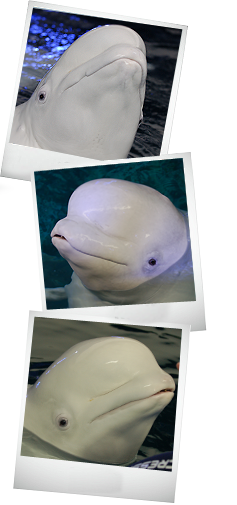 This is part 3 of a series of articles I started back in 2020, when I visited the SEALIFE Trust Beluga Sanctuary in Iceland, where the global entertainment company and former dolphinarium owner “Merlin Entertainments” was trying to rehabilitate two beluga whales (Delphinapterus leucas) to a more natural way of living. This came after they had spent almost their entire lives under human care. This project was presented as the ideal future option for belugas and perhaps even other marine mammals that currently live in dolphinaria and other zoological facilities worldwide. At the time of the release of my first article, they were only a week away of the introduction of these animals to a natural bay in Iceland. Sadly, this introduction turned out to be more complicated than was first thought. Three years later, the animals had only spent a short period in the outdoor pen, before moving back to their much smaller, land based care pool. They did not respond very well to their new environment and there were several complications. At this point I had hoped to write about them again and how they were adapting to their new, natural environment. In my search for information about the subject I came across “Oceanogràfic Valencia”; the only other facility in Europe that houses beluga whales. Coincidentally also two animals. I decided to write my second article “a Future for Belugas” in 2023 about this facility and their vision on the future of keeping belugas under human care. We are now three years further on, and the Icelandic belugas are still in their indoor enclosure. The beluga whales in Iceland have spent two seasons in the Klettsvik Bay pen for an approximate 158 days total. This comes down to 123 days in 2020 and just 35 days in 2023. This means that at the time of writing this article, they have spent only 6.4% of their time in Iceland outside in their supposed new natural habitat. In the meantime, Oceanogràfic has rescued two belugas from the war zone in Ukraine. I decided to write about this and about the question: ‘What is a “sanctuary” really?
As a refresher, or for new readers, I will elaborate once more on this fascinating species. The beluga, beluga whale or white whale (Delphinapterus leucas) is an Arctic and sub-Arctic cetacean. Cetaceans are members of the whale and dolphin family. With its large size, unique shape and striking white color it is one of the more recognizable cetaceans of the more than 90 species that inhabit this planet. They can grow over 5 meters in length and as they are adapted to living in the arctic waters they have a very distinctive appearance; a particularly round and smooth body with no protruding limbs (such as a dorsal fin or beak) and a large, bulbous head. The beluga is also known as the "sea canary" as it has a large vocabulary of high-pitched squeaks, squeals, clicks, and whistles.They are closely related and similarly built to the narwhal, which is the only other species within the Family Monodontidae besides the beluga. These two species have been observed swimming and socializing together. Furthermore a skull has been discovered with characteristics of both the beluga and the narwhal, supporting the hypothesis that hybridization is possible between these two species. Because the beluga is so recognizable and has such an endearing appearance it is very popular among many people. As these animals live mainly in Arctic waters (making seeing a beluga in the wild quite rare or impossible for many people), aquariums and dolphinaria have played a big part in the popularity of the beluga today. Belugas were the first cetacean to be purposefully captured and displayed in captivity, which started as early as 1861(!)In my previous article, I also dive into the history of belugas under human care.
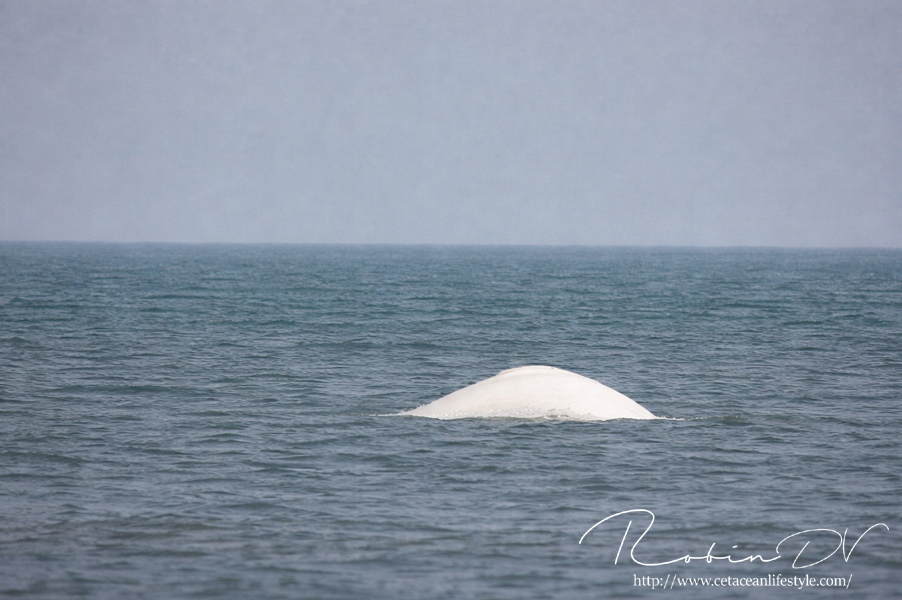
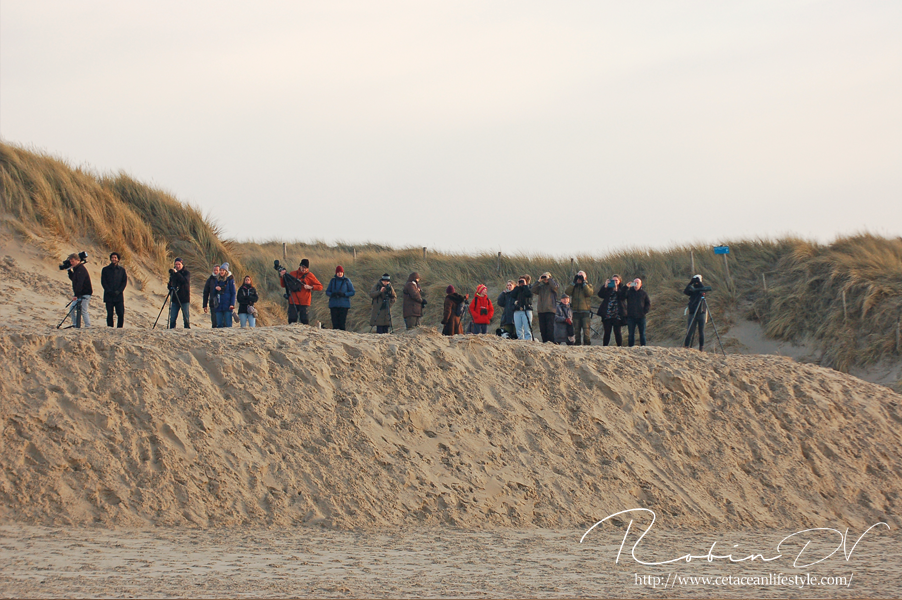
My interest on continuing this series was sparked at the beginning of this year, when a wild beluga spent several weeks at the Dutch coast, the country where I was born and raised. This is of course very unusual. Beluga whales live in Arctic and sub-Arctic waters. The waters of the Dutch area of the North Sea are far from its natural habitat. Not to mention that this animal was sighted alone, while they are normally social animals that live in pairs or groups. I went to see this animal and was able to spot it several times. It was the first sighting of a beluga in the Netherlands since 60 years. What drove this animal to do this? Climate change? Windmills? Pollution? Who knows.. but clearly the future of wild belugas is as unsure as the future of belugas under human care.
Above: A beautiful day at Strandslag Drooghe Weert, Julianadorp, where I, like many others, went to catch a glimpse of the wild beluga. And I managed to see the animal!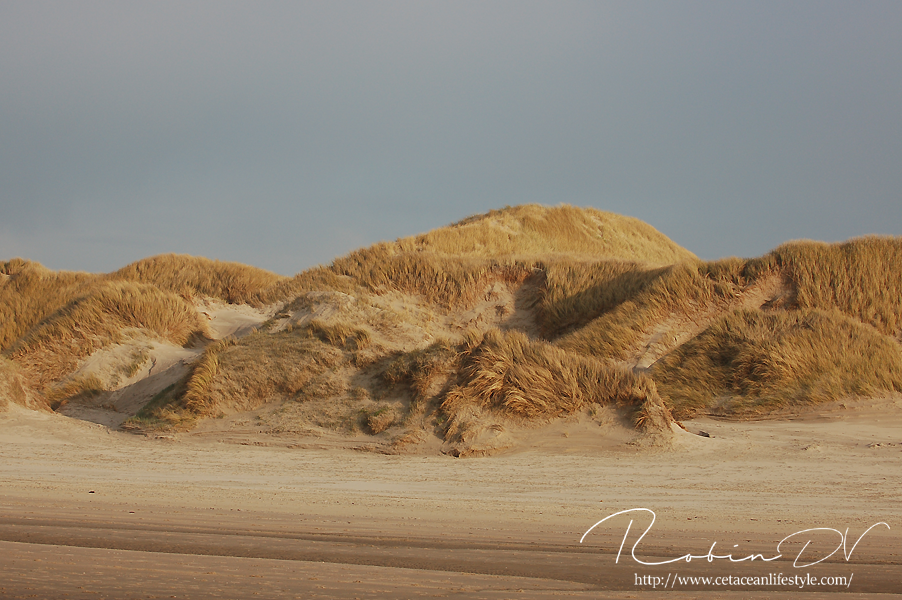
Beluga's under human care in Europe
Today, belugas are one of the most commonly kept cetaceans under human care. They are housed in aquariums, dolphinariums, and other zoological facilities in North America, Europe, Russia, and Asia. The largest number of these animals lives in Russia and Asia (with an estimated population of between 100 and 200 animals, though possibly even more), while around 85 animals live in Western institutions in North America, Canada, and the European Union. Despite that, there are only two facilities in Europe that house belugas. I visited both institutions while writing the previous two articles. Here, I will briefly introduce them once again
SEALIFE Trust Beluga Sanctuary
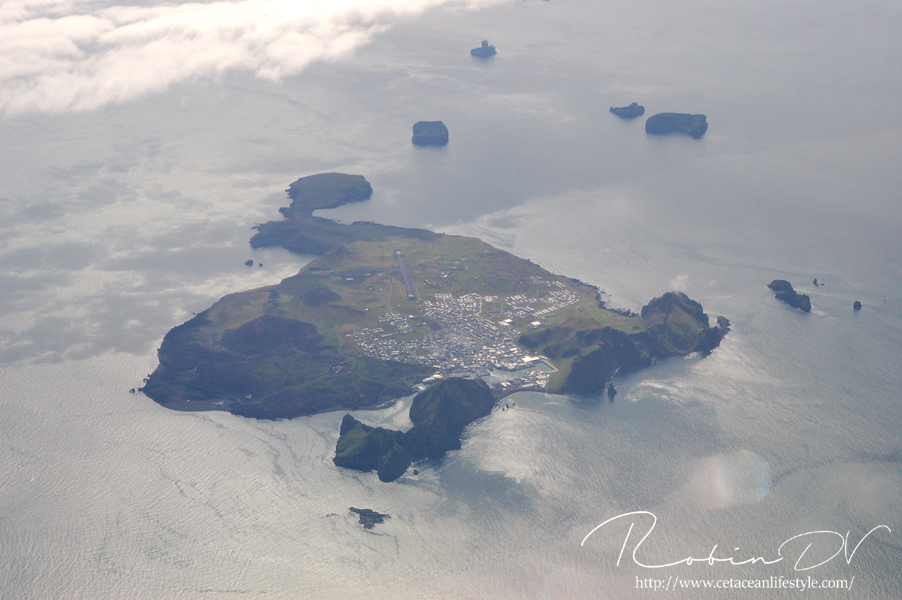
The SEA LIFE Trust Beluga Whale Sanctuary is the world’s first open-water sanctuary specifically designed for beluga whales that previously lived under human care. It is located in Klettsvik Bay on Heimaey Island, part of the Vestmannaeyjar archipelago off the south coast of Iceland. The sanctuary was created by the SEA LIFE Trust, with main support from “Merlin Entertainments” and the conservation organisation “Whale and Dolphin Conservation” (WDC), to provide a more natural alternative to traditional aquariums or marine parks.
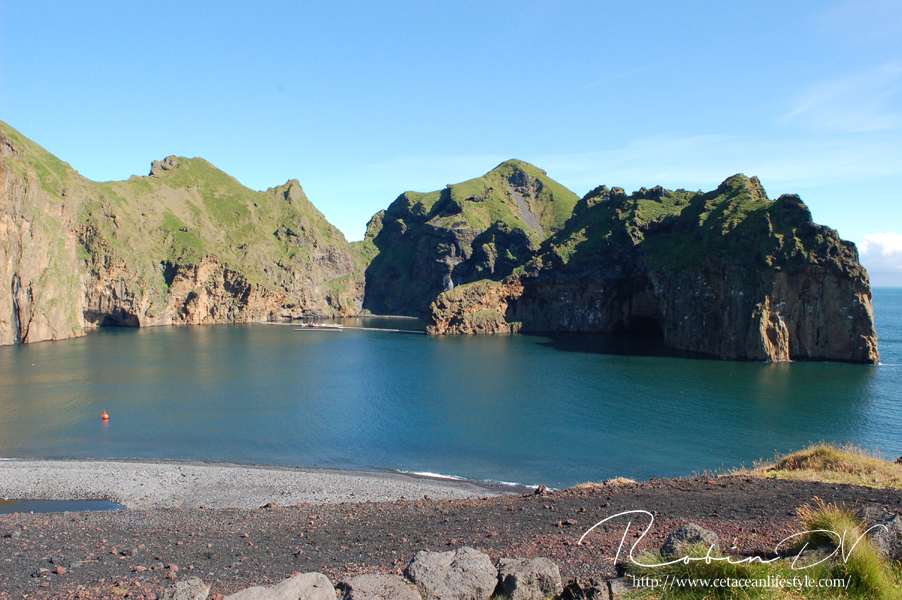
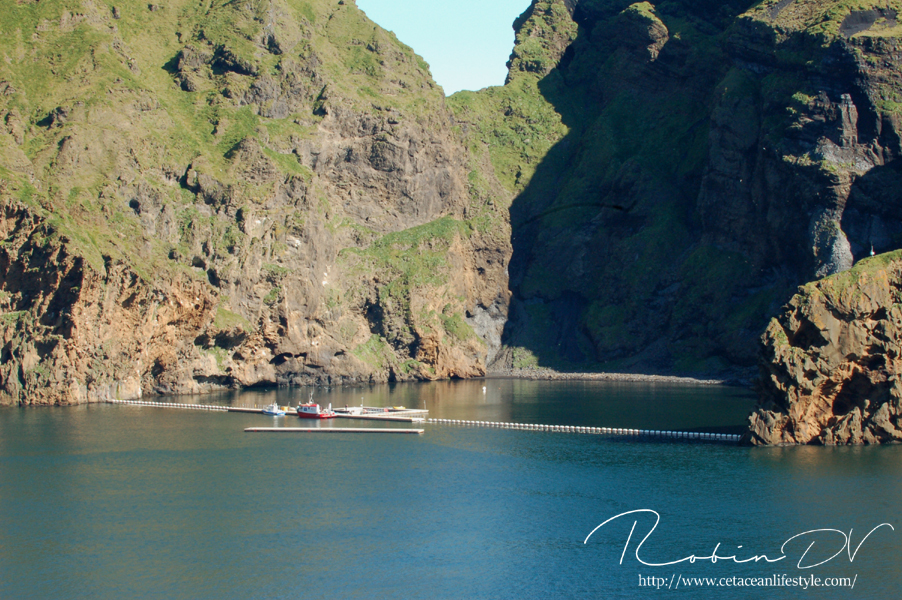
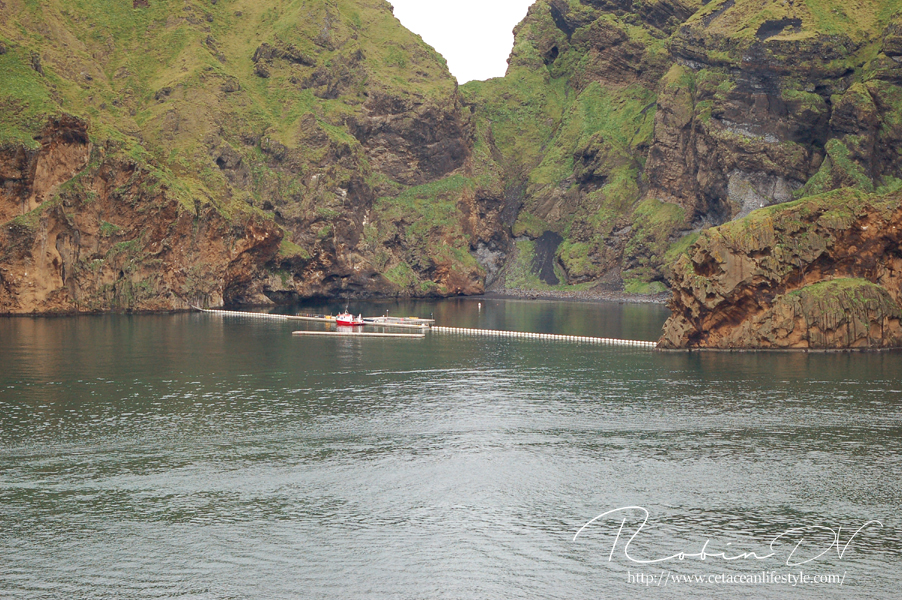
The sanctuary consists of a large natural sea bay enclosed with nets where belugas can swim in ocean water and experience natural conditions, while still receiving human care. The bay covers roughly 32,000 m² and reaches about 10 m depth, giving the whales space to dive and explore. It also includes a landside care facility, quarantine pools, veterinary care areas, and a visitor center with educational exhibits and a puffin rescue centre. The sanctuary claims it has space for up to 10 belugas, although currently only two live there. The sanctuary’s first residents are two female belugas named Little Grey and Little White. They previously lived in Changfeng Ocean World in Shanghai and were moved to Iceland in 2019 after a complex 6,000-mile journey involving air, land, and sea transport. The move was intended to give them a retirement from aquarium performance and a life in a more natural environment while still under human care.
The project aims to demonstrate that coastal sanctuaries can be a viable alternative for belugas, and potentially other marine mammals such as dolphins, who are currently kept under human care. The idea is that animals that cannot be fully released into the wild may still benefit from living in a semi natural marine environment rather than in a traditional facility. The sanctuary has, however, faced several significant setbacks. For example, a boat sinking in 2022 caused fuel contamination in the bay, temporarily delaying the whales’ access to the open-water habitat and requiring environmental cleanup and repairs. After nearly seven years in Iceland, the whales have only been transported to the open-water habitat twice. On both occasions, they were returned to the land-based care pool after a short period of time. Reports from staff involved in their care indicate that, while in the bay, the animals showed signs of distress and were difficult to manage, raising concerns about their welfare in that environment. Some veterinarians, welfare specialists, and keepers have expressed opposition to continued attempts to place the whales in the bay, arguing that such efforts may be driven more by external expectations than by the animals’ best interests. At the time of writing, the animals remain in their care pool, highlighting the ongoing challenges of transitioning captive marine mammals to more naturalistic environments..
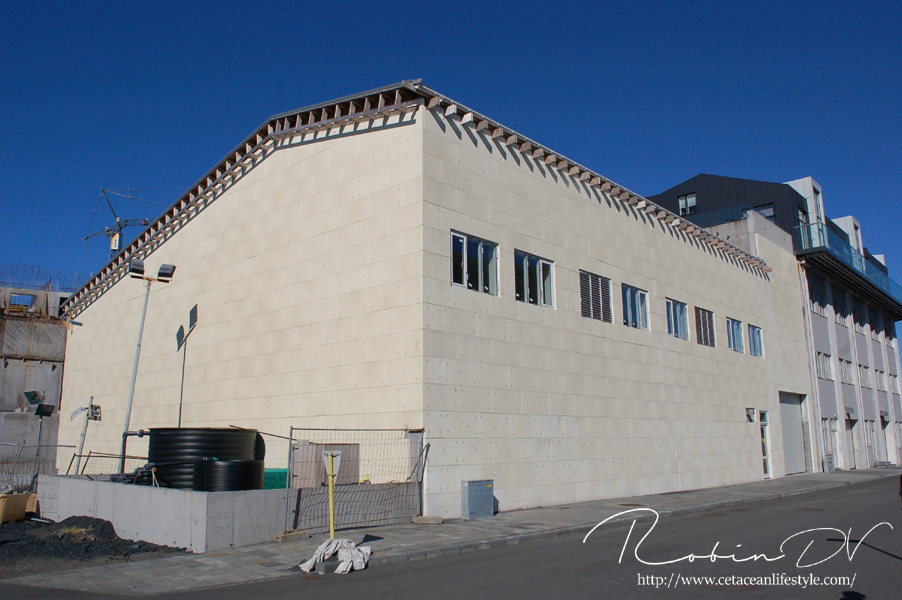
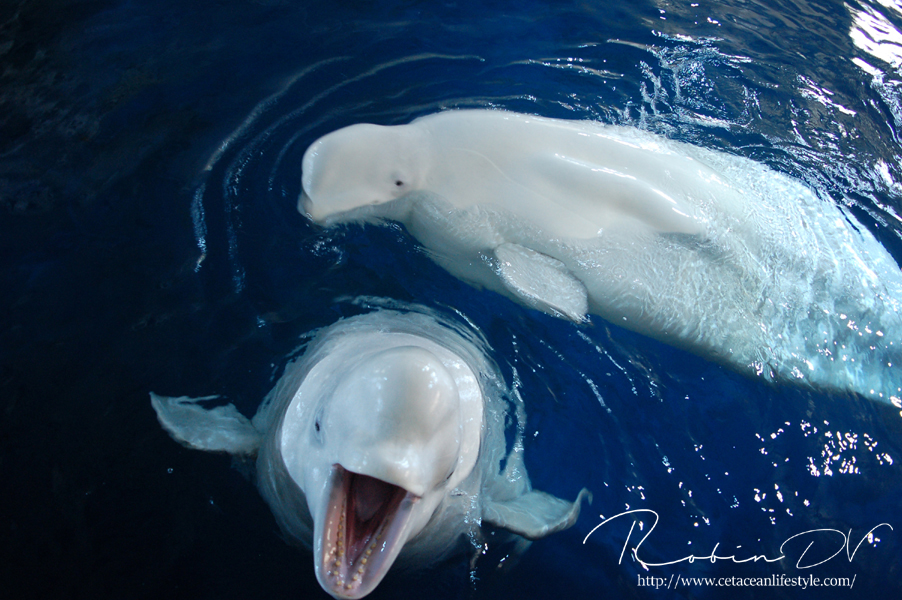
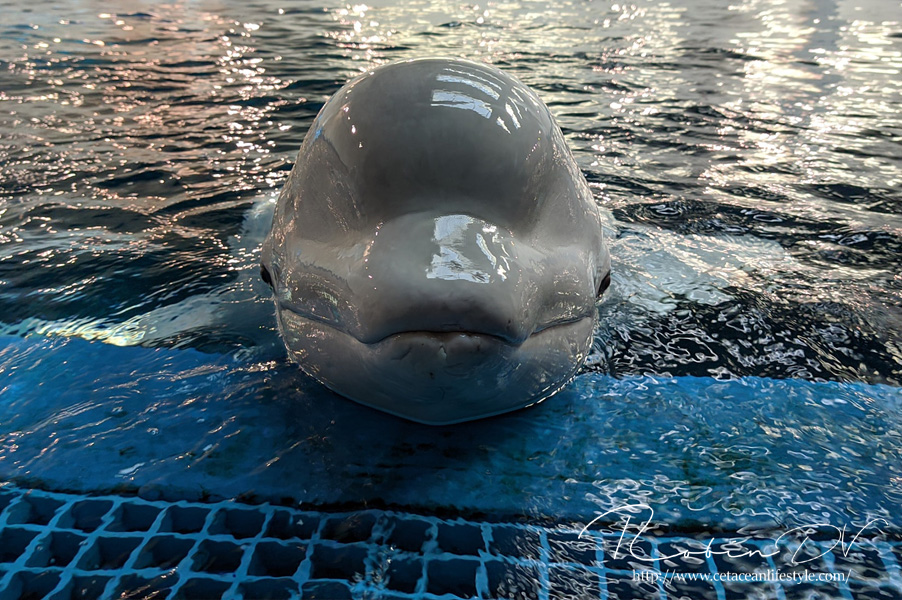
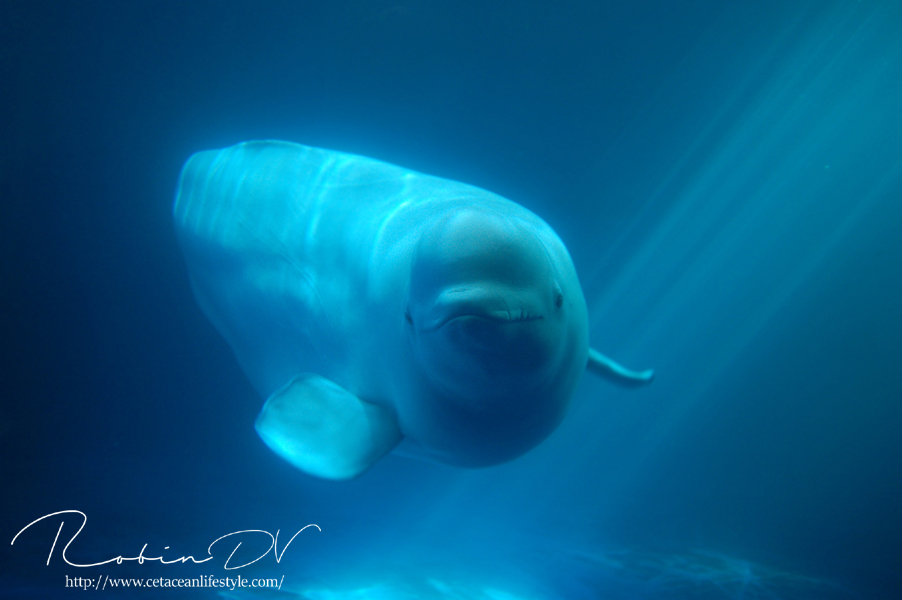
Above: the SEALIFE Trust Beluga Sanctuary, the only operational ‘sanctuary’ in the world, where they have now spent seven years trying to integrate two belugas into a natural habitat.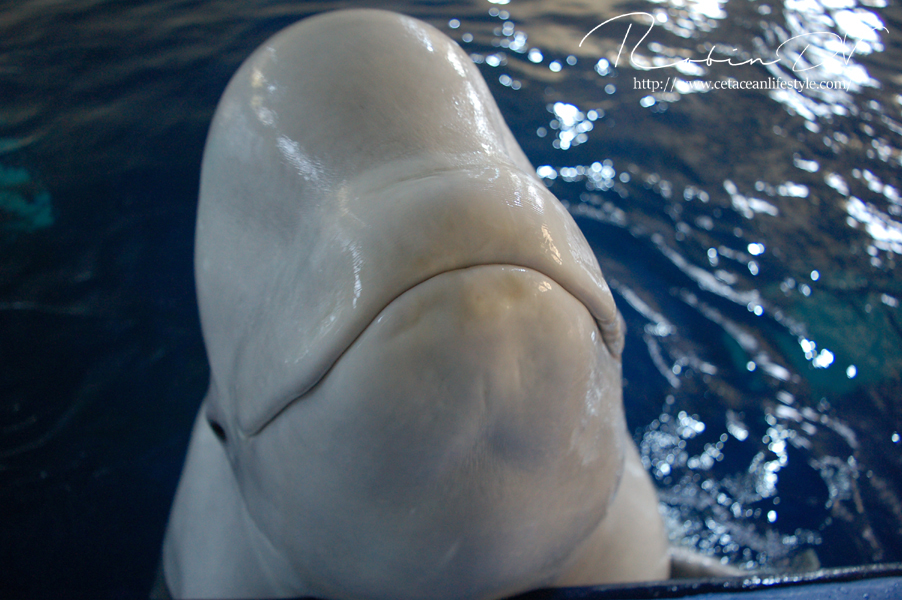
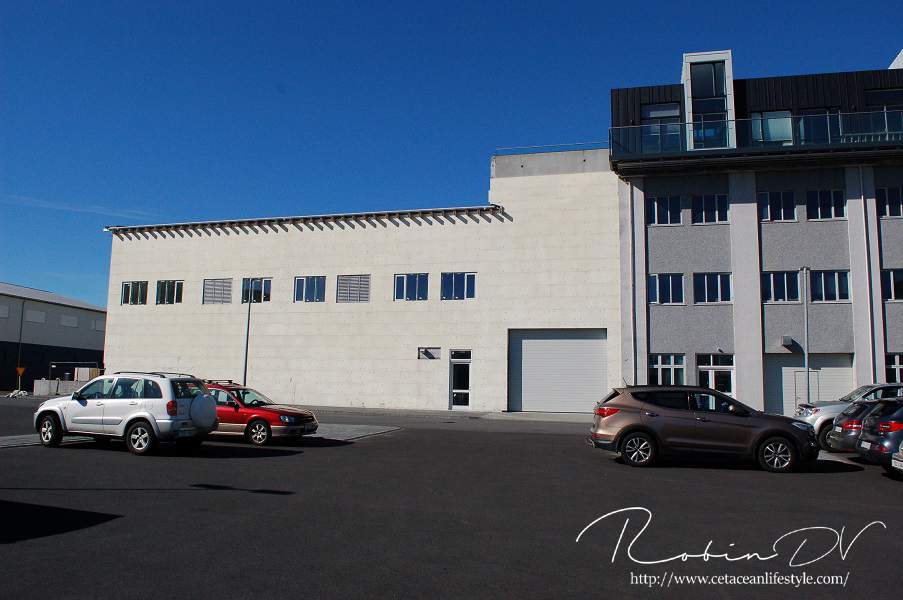
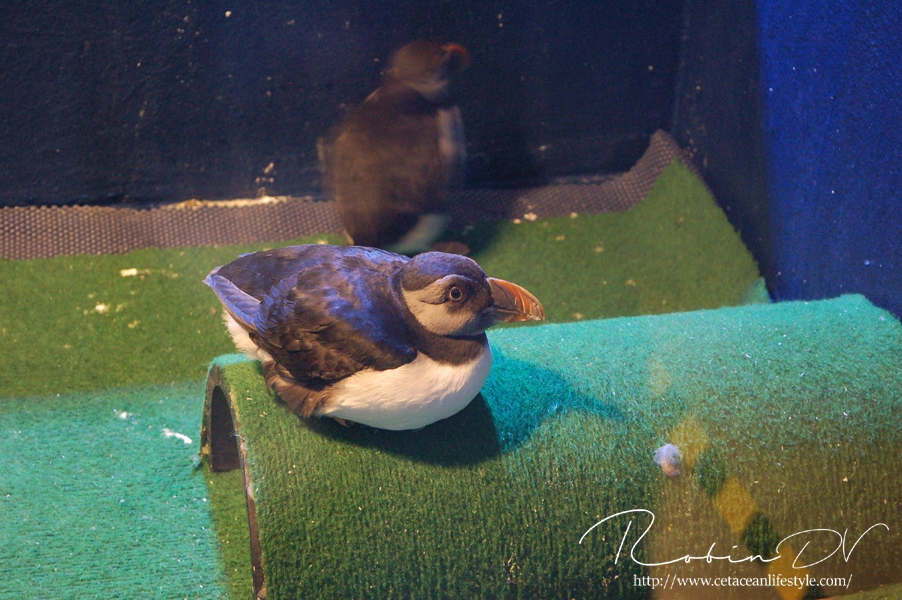
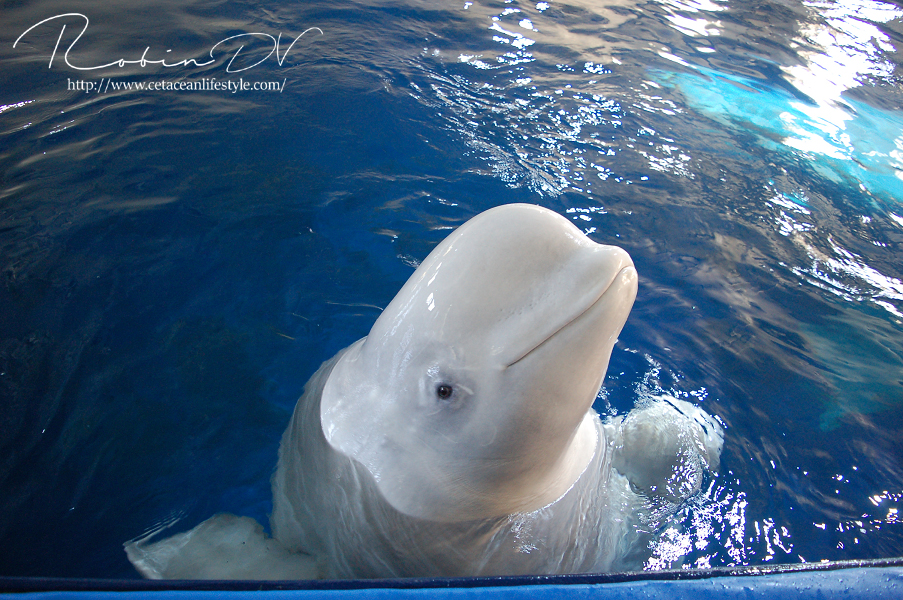
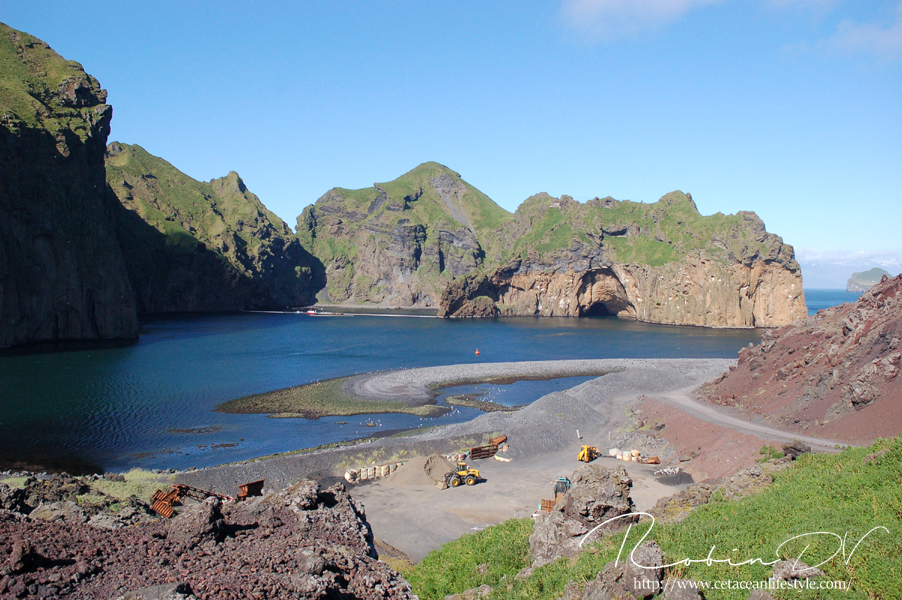
Oceanogràfic Valencia
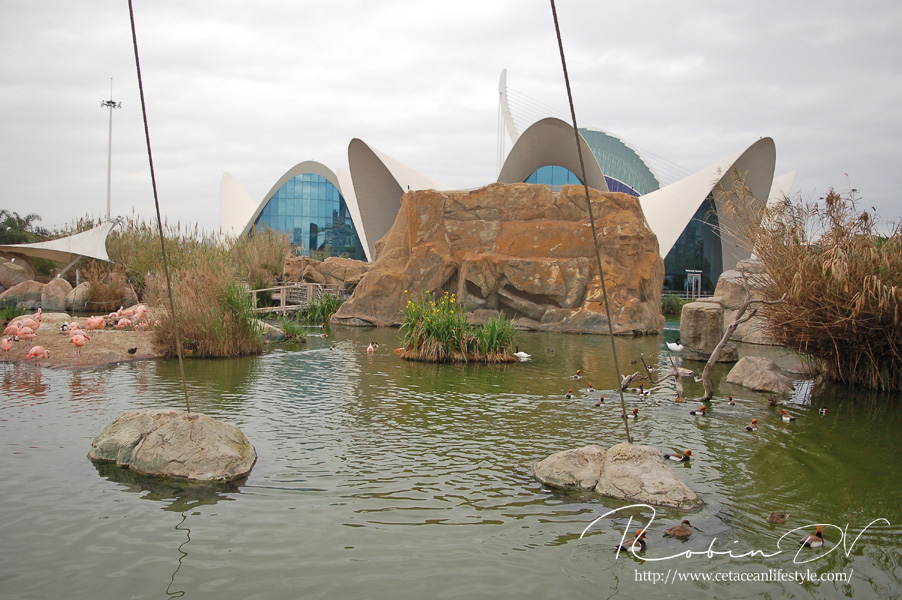
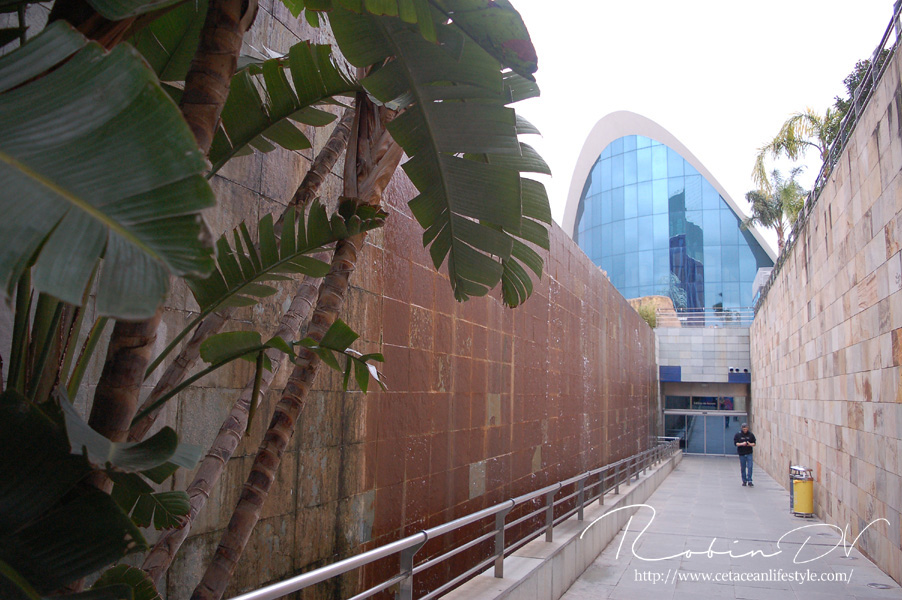
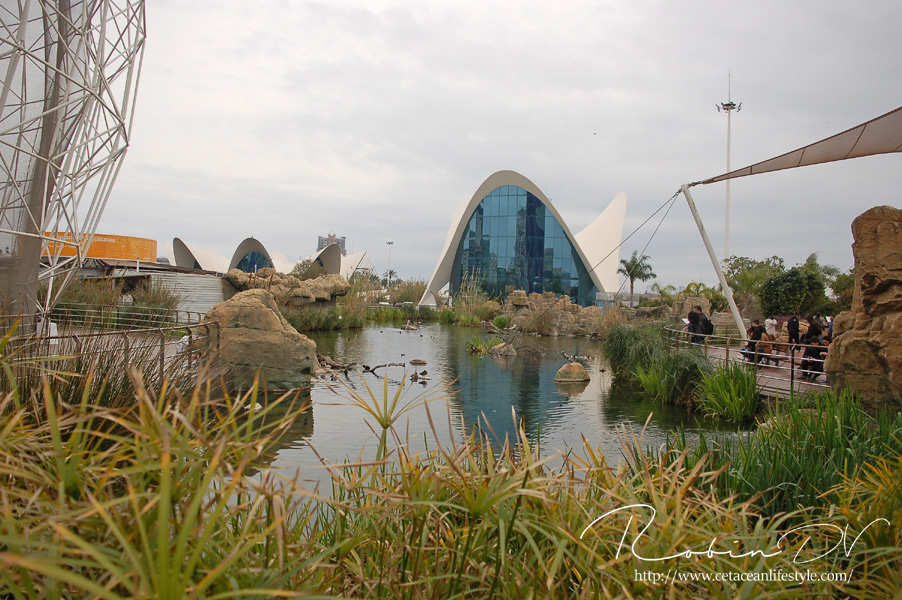
Oceanogràfic is a public aquarium situated in the city of Valencia, Spain. It is part of the Ciutat de les Arts i les Ciències otherwise known as the City of Arts and Sciences. It was opened on February 13th, 2003 and is known as the largest aquarium complex of Europe. The aquarium houses more than 20.000 animals of about 600 different species such as: dolphins, belugas, sea lions, seals, penguins, sea turtles, sharks, rays and many different birds, fish, crustaceans and other aquatic creatures. Among education by using the many animals on display in the park, Oceanogràfic also rescues and rehabilitates animals such as sea turtles, marine mammals, sharks, rays, sea horses, corals and more. and has many initiatives of conservation and protection of wild animals, especially local and native species to Spain. They also manage research and conservation projects in Antarctica, Iceland, Galapagos Islands, Ecuadorian Amazon or Thailand among others.
The Oceanogràfic Foundation carries out a wide range of conservation, rescue and research projects focused on marine and freshwater biodiversity. It’s Arca del Mar veterinary centre rehabilitates injured animals found along the Spanish coast, particularly stranded sea turtles and marine mammals. Research projects include groundbreaking work on decompression sickness in sea turtles caught in fishing nets, studies of diving physiology in marine animals, and tracking dolphins in open waters to assess the health of marine ecosystems. The foundation also collaborates with the fishing sector to study interactions between dolphins and fishing gear, rescue accidentally captured shark eggs, and maintain communication with fishermen to report environmental changes and stranded wildlife. In addition to rescue and research, the foundation runs several conservation and restoration initiatives. These include head-starting sea turtle hatchlings, developing techniques for breeding the critically endangered European eel in captivity, and captive breeding programmes for threatened local species such as the European pond turtle, Hermann’s tortoise, Iberian ribbed newt and Valencia toothcarp. The organisation also works on seafloor conservation projects in Jávea, habitat restoration and beach and seabed clean-ups, and the recovery of important freshwater habitats for amphibians and other species. Other activities include banding flamingos for scientific monitoring, maintaining biological sample and disease databases to support international research, and breeding certain fish species in captivity to reduce the need for wild capture for aquariums. If you are interested in a more elaboration on these projects and the efforts of Oceanogràfic, I highly suggest you read the previous article as well..





The Beluga's of Oceanogràfic Valencia
Until recently, only two belugas lived at Oceanogràfic: an adult female named Yulka and her son Kylu. Since June 18, 2024, however, there have been four belugas at Oceanogràfic. In a complex international rescue operation, two animals were transferred directly from Ukraine, which, due to the ongoing war, had no other option than to be transported to Valencia. These two animals, Miranda and Plombir, came from a dolphinarium in Kharkiv. Never before had such an operation been carried out. The animals were first transported by truck from Kharkiv to Odesa for about 12 hours. From there, they were taken to Moldova, after which they were flown to Valencia. This created a small social group of four belugas of both sexes, similar to how their counterparts live in the wild. Today, Miranda and Plombir are part of Oceanogràfic’s beluga group and contribute to scientific research on beluga physiology, immunology, communication, and welfare, conducted by the Oceanogràfic Foundation.

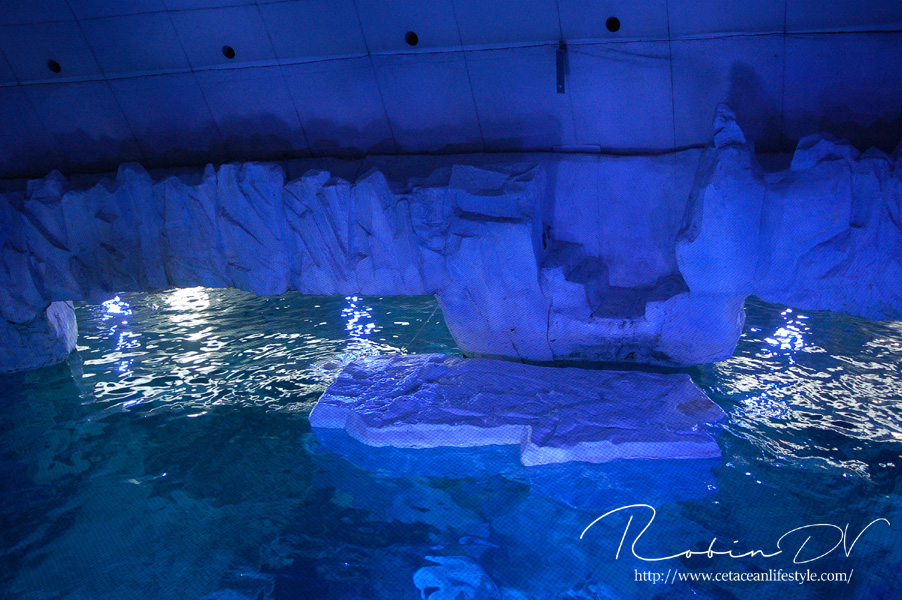
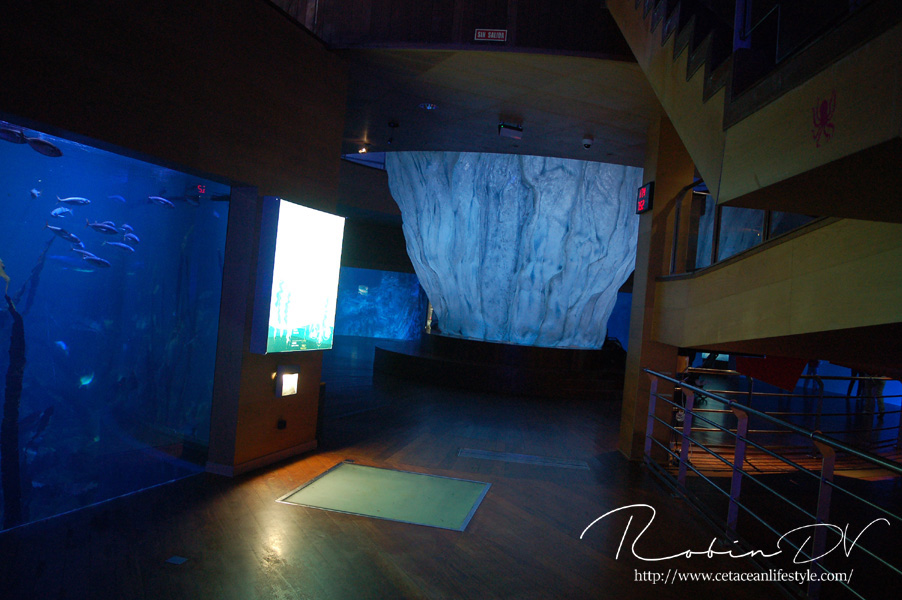
Yulka
Yulka is an adult female beluga. She was born in the wild somewhere in Russia, with her estimated year of birth being 1996. She was captured in 1999 and transported from Russia to the Mar del Plata Aquarium in Argentina. There she came to live with the male Kairo, who had already been captured in Russia in 1996, spent some time in a research center in Moscow, and had been living in Mar del Plata since 1998. The animals remained in Mar del Plata until July 2003, when they were moved together to Oceanogràfic. The reason was that the Mar del Plata Aquarium ran into difficulties during the recession. The original operator of Oceanogràfic therefore purchased several animals from that aquarium and distributed them among different institutions in Spain in an attempt to save them. On November 3, 2006, Yulka gave birth to her first calf, a male that unfortunately died on November 28. Even so, it was the first successful beluga birth in Europe, in the sense that the calf was born alive and survived its first week. On November 15, 2016, she gave birth to her second calf, again a male, named Kylu. This was the first time a beluga calf survived the vulnerable period after birth and then also its first year of life. Kylu is still living with Yulka today. Kylu’s father, Kairo, died on the morning of April 26, 2022. He was estimated to be at least 60 years old. At that point, he had spent nearly 20 years at Oceanogràfic..
Above: Yulka, one of the two original animals that arrived at Oceanogràfic in 2003. She arrived in Valencia together with the male Kairo, who died in 2022. Together they had two offspring. The first lived only a very short time; the second, named Kylu, still lives with her in Valencia.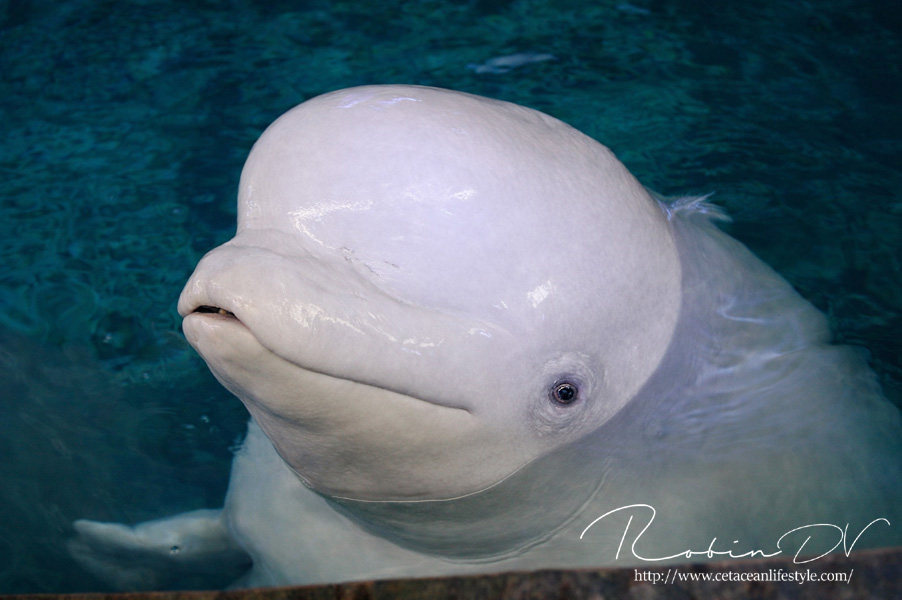
Kylu
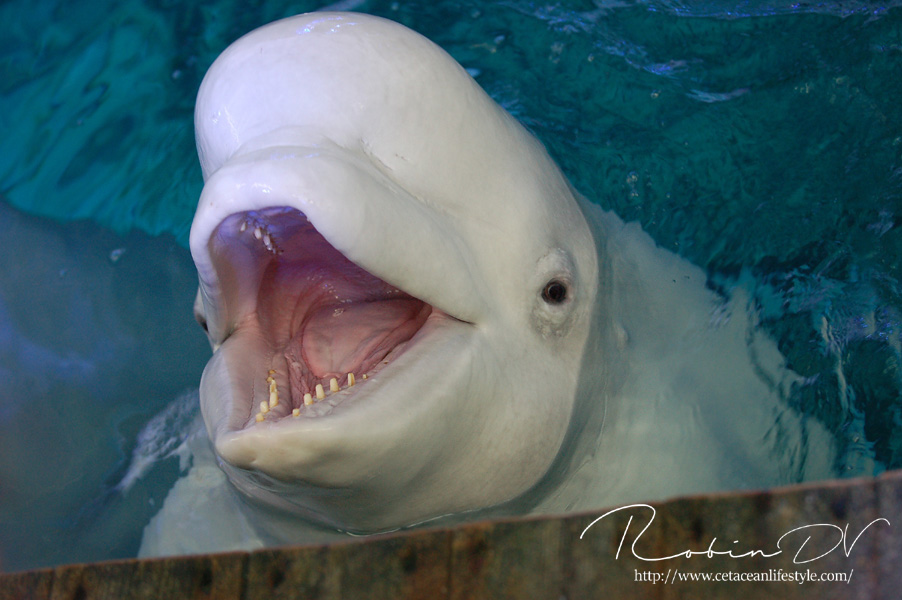
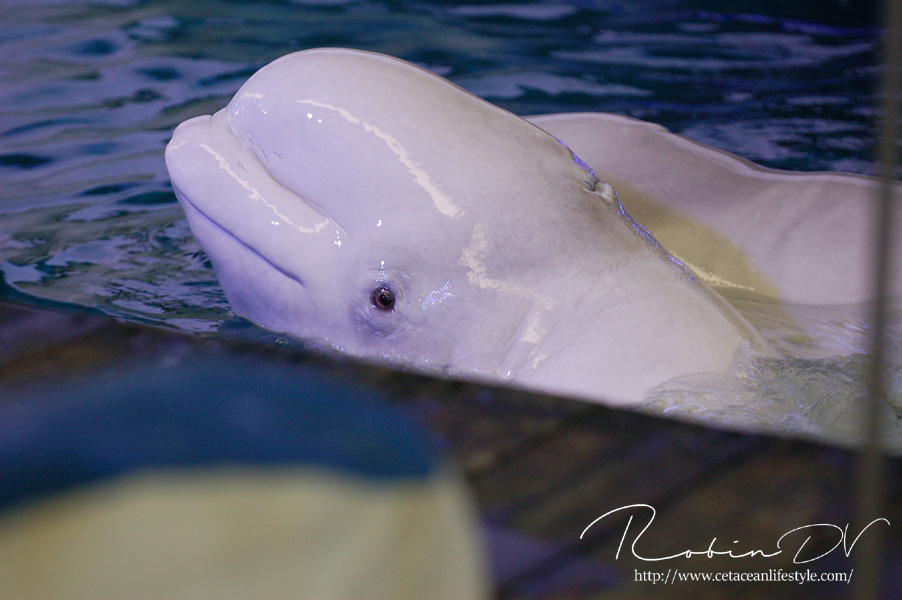
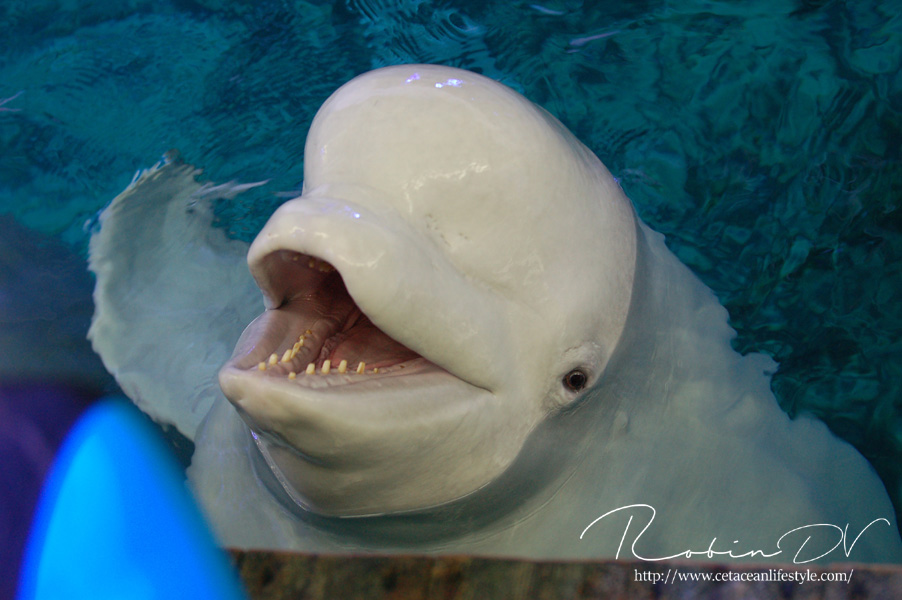
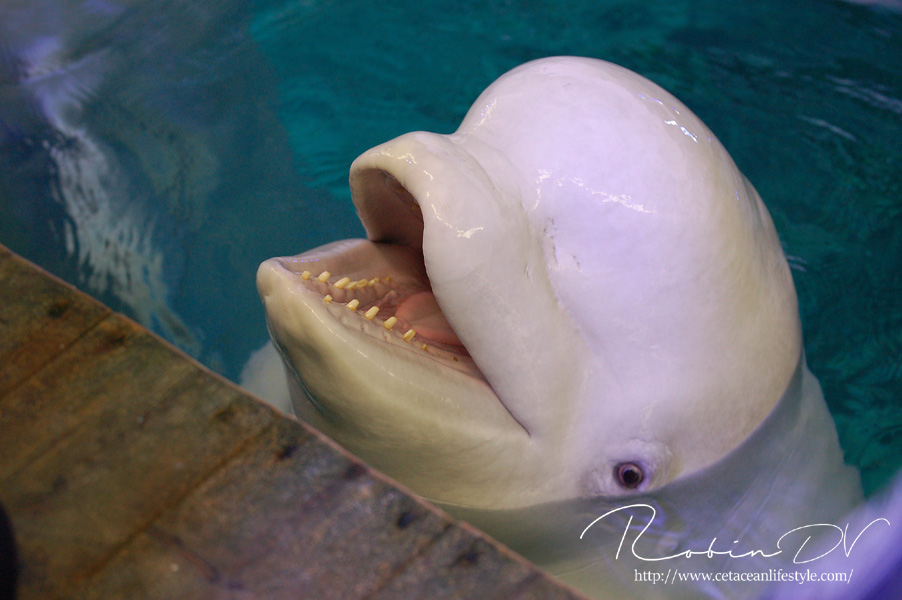
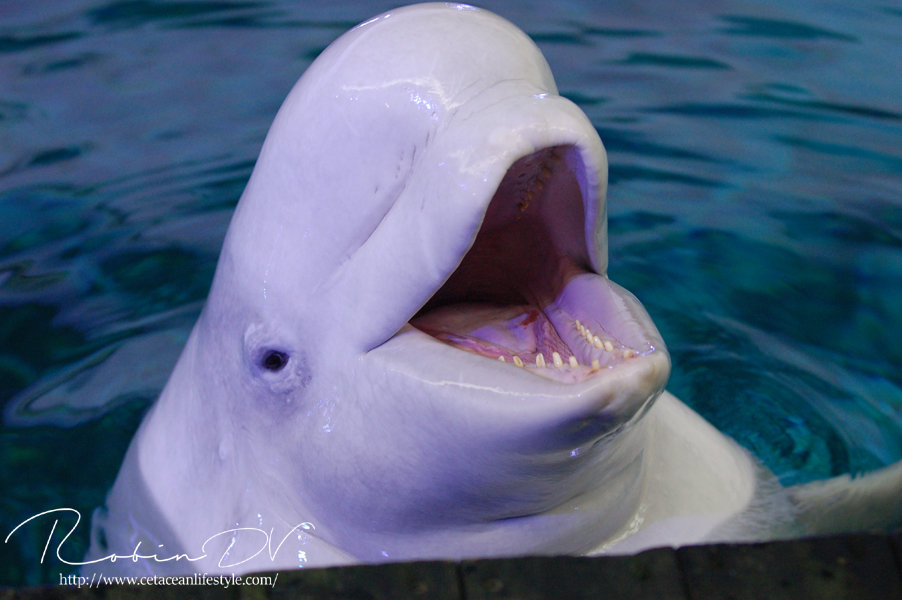
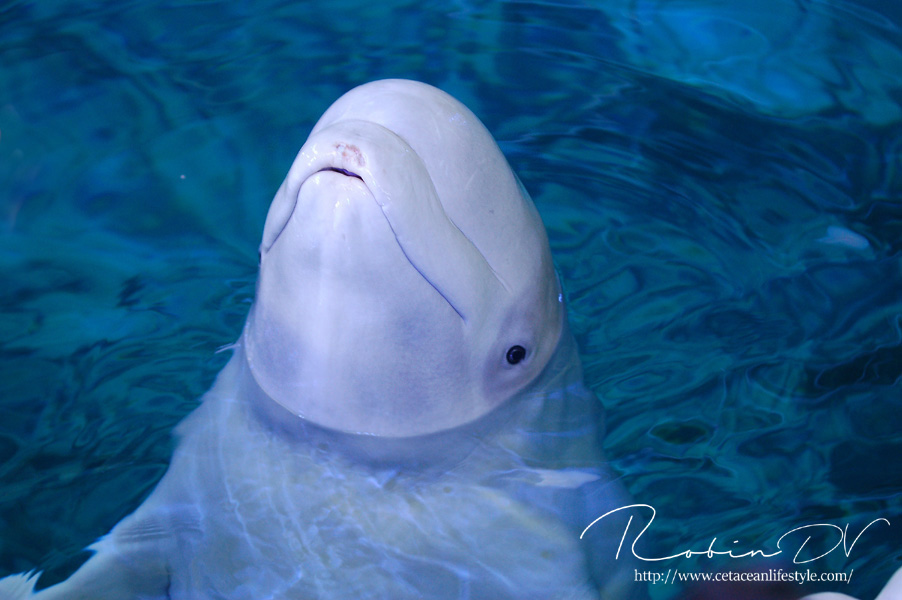
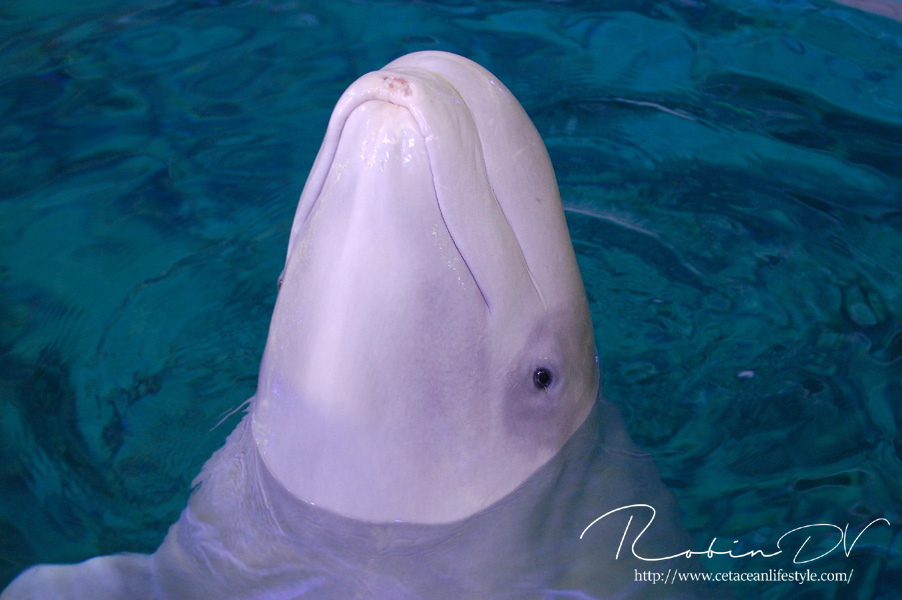
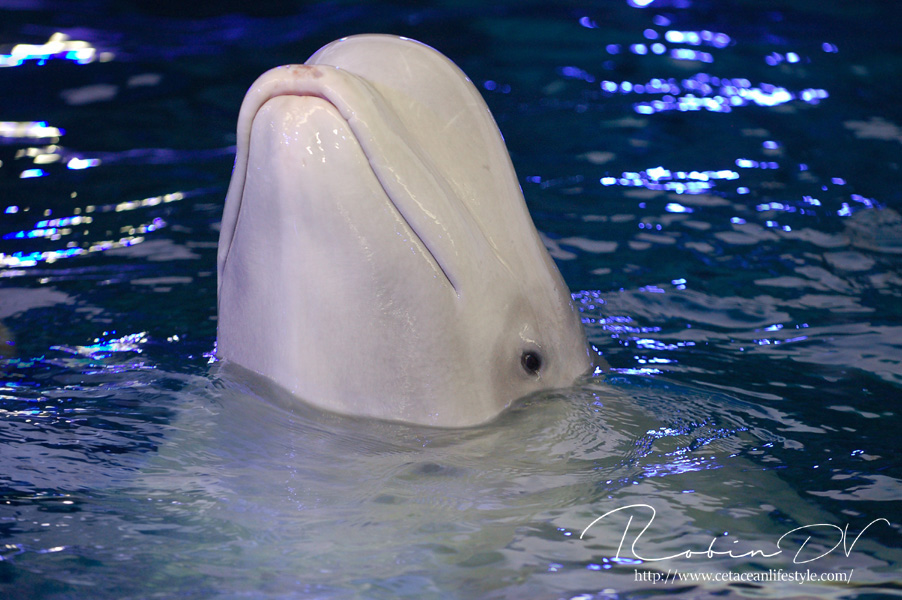
Kylu was born on November 15, 2016, after a gestation period of 500 days, and was named after the initials of his parents, Kairo and Yulka. He was born during the supermoon. At birth, he weighed 63 kilos and was 1 meter and 60 centimeters long. At that time, his father Kairo was already estimated to be around 50 years old, yet it was a natural conception. Kylu was hand-reared by his caretakers because he had difficulty nursing from Yulka. A groundbreaking method was developed using a mixture of high-fat, lactose-free milk with taurine, which naturally occurs in herring and salmon. Kylu was the second beluga in the world to be hand-reared and the first in Europe. The method and formula used to feed Kylu were also applied a year later to a rescued beluga calf from Alaska named Tyonek at SeaWorld San Antonio. By now, Kylu is already a young adult animal. Male belugas reach sexual maturity between 8 and 14 years of age. Kylu is easy to recognize as the smallest animal at Oceanogràfic. He has gray patches around his eyes and is not yet completely pure white in color. This is a remnant from when he was still a calf as belugas are born completely dark gray. In a young beluga, the external layer of the epidermis is very thick compared to the adult’s. The particular structure of the newborn’s skin is very unstable, causing a gradual molt to the pure white color. It takes several years until the animal is fully white, some animals even retain some gray dappled markings
Boven: Above: Kylu, currently the only beluga born under human care in Europe. He was also the first beluga in both Spain and Europe to survive his first year of life. Kylu was conceived naturally, but due to complications with nursing, he was hand-reared by his caretakers.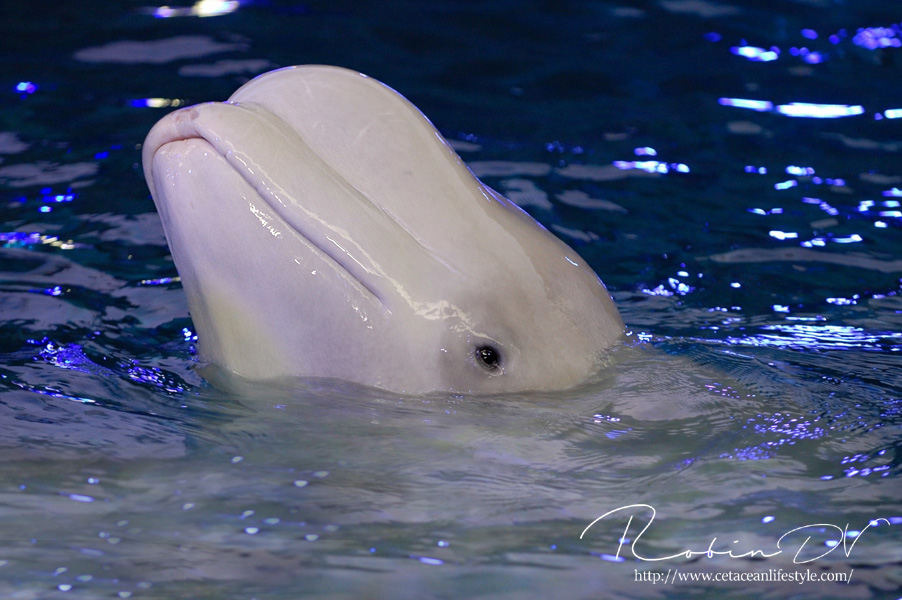
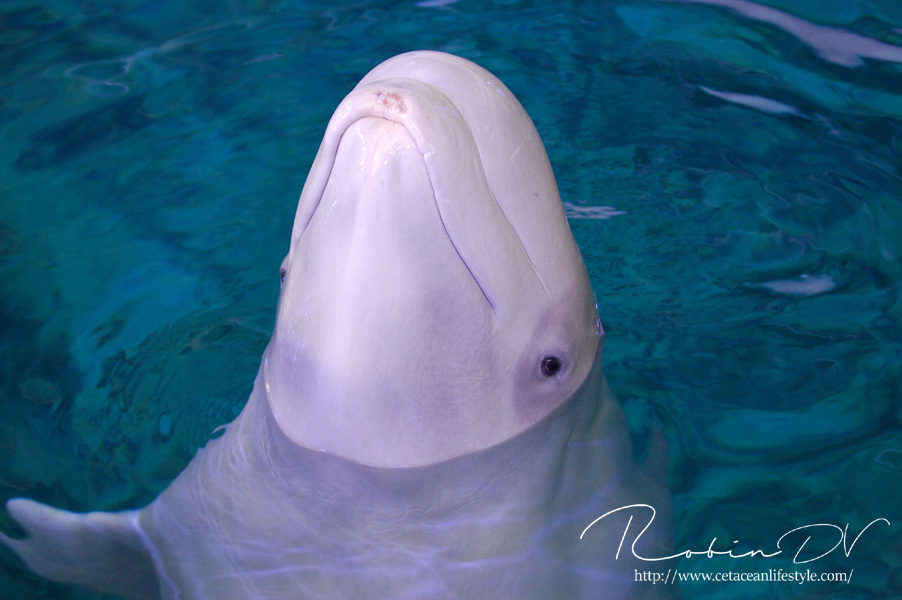
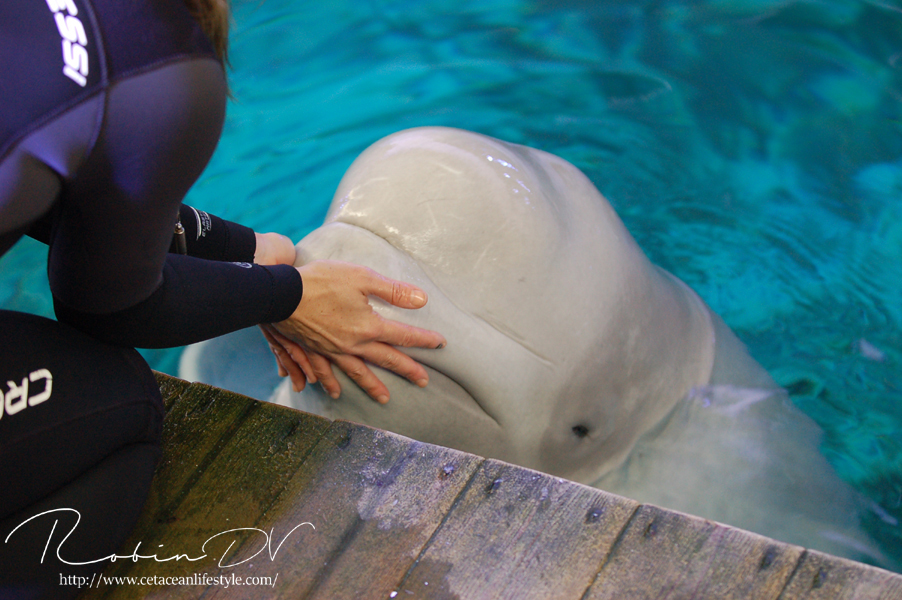
Plombir
Plombir, or Пломбир, was captured in Russia. His name means ‘cream,’ but can also be translated as ‘sundae,’ like the famous ice cream dessert. On May 25, 2010, he was transported to the ‘NEMO’ dolphinarium in Odessa. The name ‘NEMO’ refers to a chain of dolphinaria under one parent company. NEMO opened its first dolphinarium in 2005 and exhibited Black Sea bottlenose dolphins there until 2010. After that, 16 dolphins were imported from Japan (11 females and 5 males). In 2013, another 20 bottlenose dolphins were imported, also from Japan. As a result, both ecotypes are still kept in NEMO dolphinaria across Ukraine, Russia, and Crimea. At its peak, NEMO had more than 15 locations spread across these countries. NEMO dolphinariums are small and have much simpler infrastructure than the facilities we are used to in Western Europe. They do not meet the standards that we in Western Europe uphold for marine mammals. The animals there also take part in traditional shows and visitor interactions, often with little or even no educational component at all. That is still the norm there. Plombir lived in Odessa together with dolphins and was later joined by Miranda, a female beluga. In 2012, he moved together with Miranda from the dolphinarium in Odessa to the dolphinarium in Kharkiv. There, the animals lived together with dolphins. When the war broke out in Ukraine, the fighting came dangerously close to NEMO Kharkiv. At great personal risk, the caretakers continued to care for the animals. The dolphins were able to be moved to NEMO Odessa and then to the Constanța Dolphinarium in Romania. However, finding a safe place for the belugas proved more difficult than expected. Oceanogràfic was then asked for help, and they immediately began planning a rescue operation. On June 18, 2024, Plombir and Miranda arrived in Valencia.
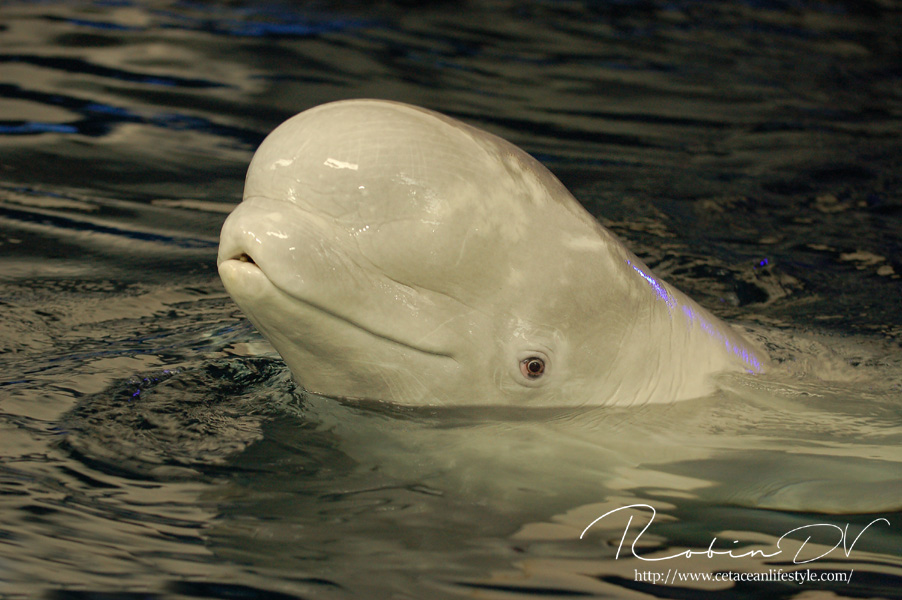
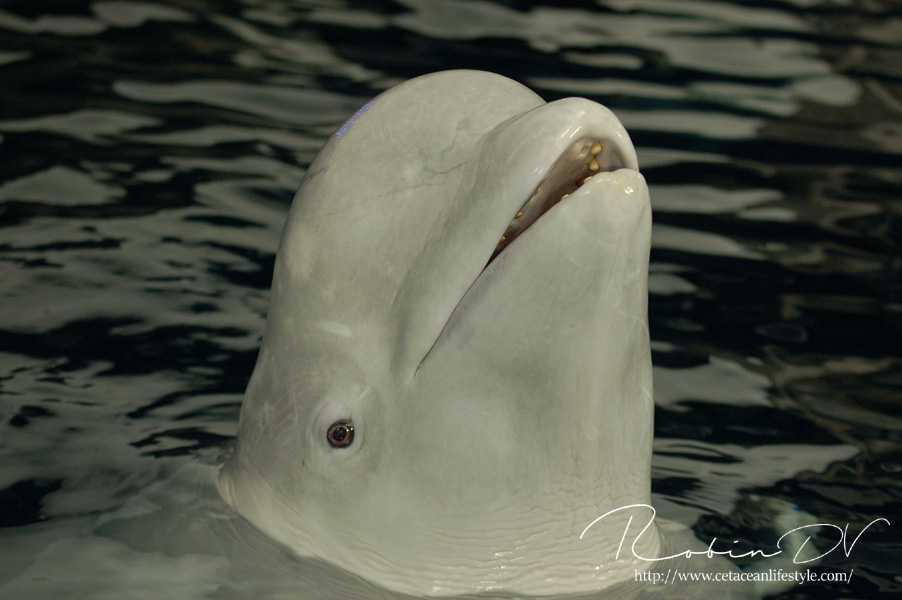
Above: Plombir, one of the two belugas rescued from Ukraine. Plombir is an enormous beluga, about 5 meters long, making him one of the largest, if not the largest beluga under human care. This makes him easy to recognize when you see him swimming alongside the other animals.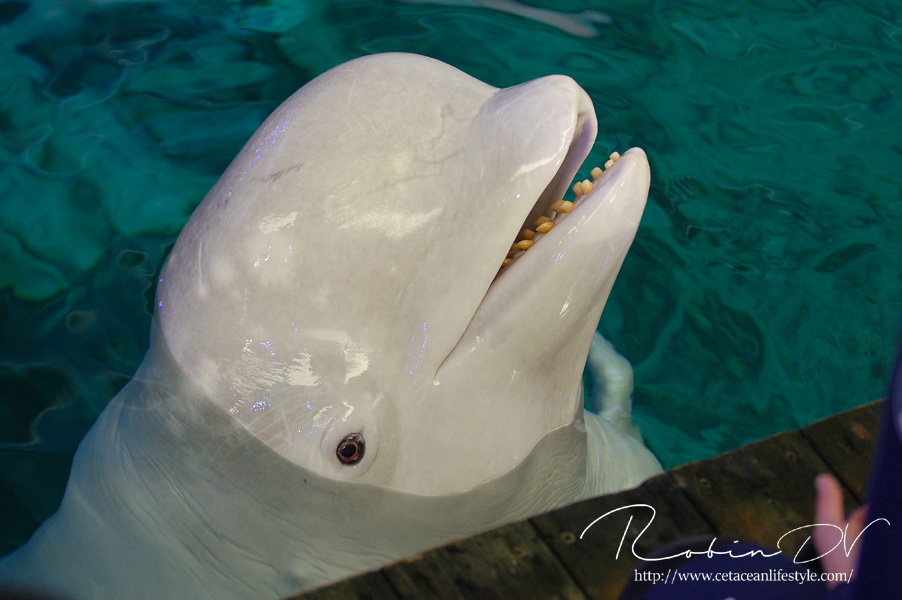


Miranda
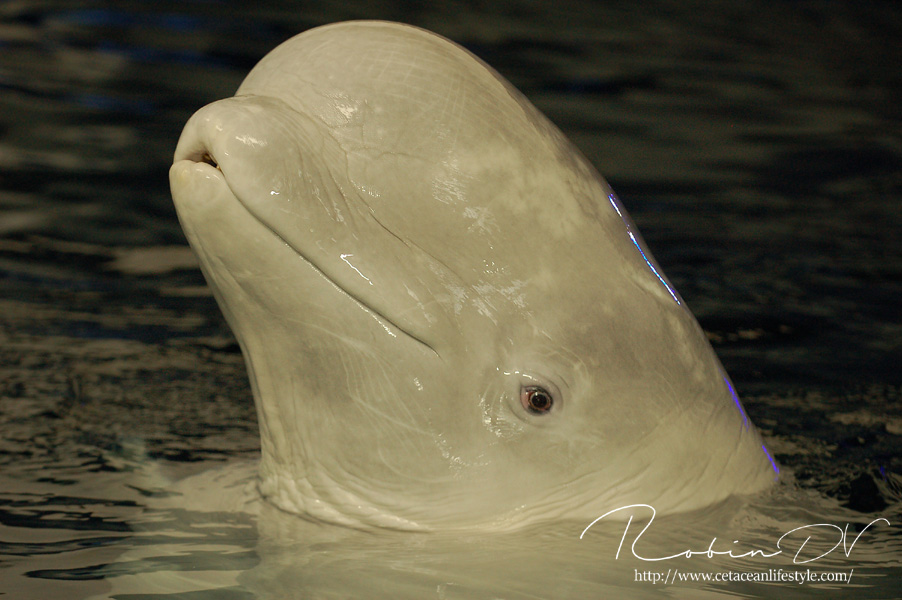
Miranda, formerly also known as ‘Snezhka’ or ‘Снежка’ (‘Snow’), is a female beluga. She too originally came from the wild. In Russia, it is not prohibited to capture marine mammals from the wild, and this is still done regularly to supply dolphinariums in Russia itself, as well as Ukraine and Asia, with animals. That may seem unthinkable to us here in Western Europe, where it has been forbidden for more than 40 years to acquire marine mammals from the wild, but in those countries the regulations and what is socially accepted are different from here. Miranda lived together with Plombir in Odessa. However, she was harassed there by the group of dolphins. Because of her calm and timid nature, she was chased and bullied by the male bottlenose dolphins in the Odessa dolphinarium. That is why the two animals were moved to Kharkiv, where a calmer group of dolphins lived, consisting mainly of females. It was thought that this would be a better fit and that Miranda would feel more comfortable there. The two moved to Kharkiv in 2012 and later arrived together at Oceanogràfic after an incredible and highly complicated rescue operation, the details of which I would like to share with you today.
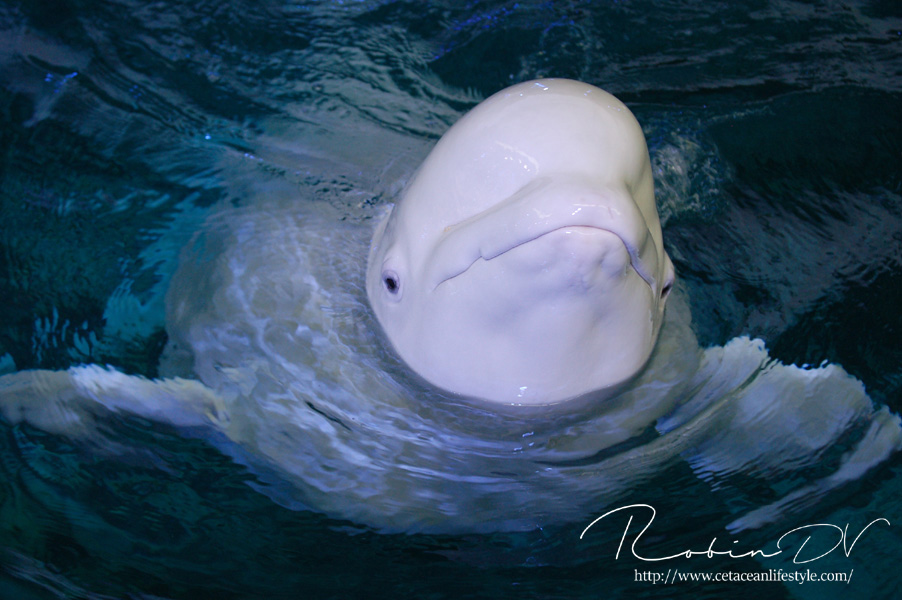
Above: the female of the duo that came from Ukraine. Miranda is the easiest to recognize by the small piece missing from her ‘lip.’ She is a very calm animal with a shy and reserved character. Of all four animals, she is also the brightest white, without gray patches or black spots.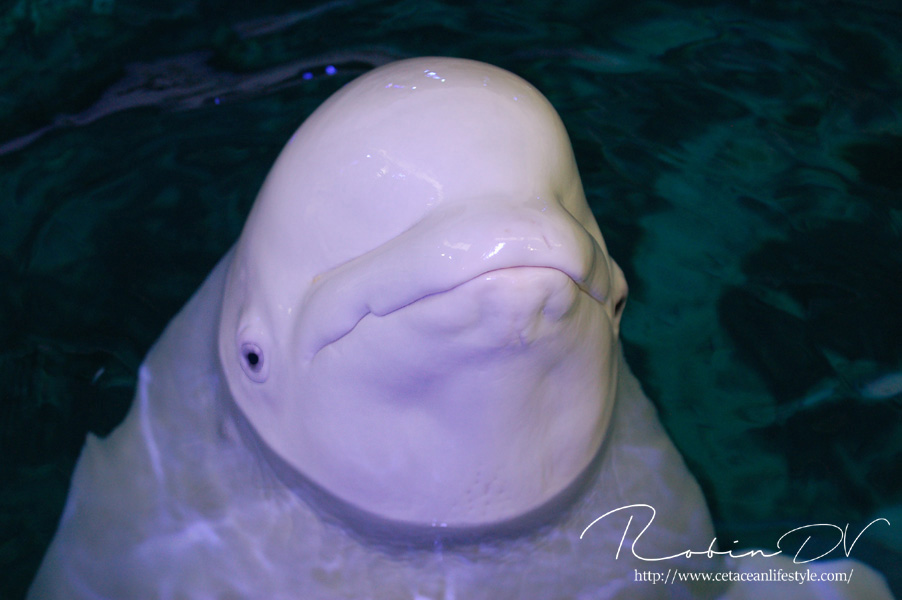
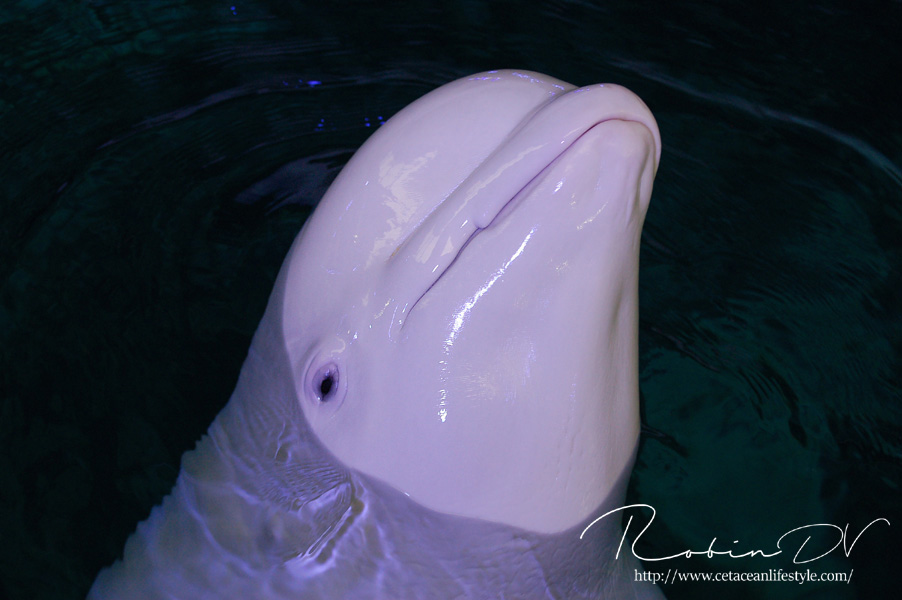
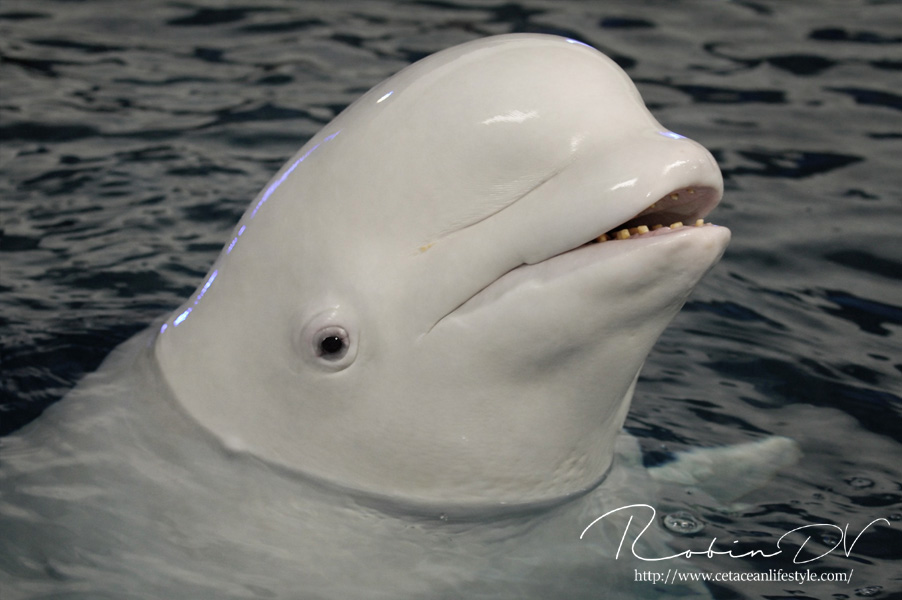
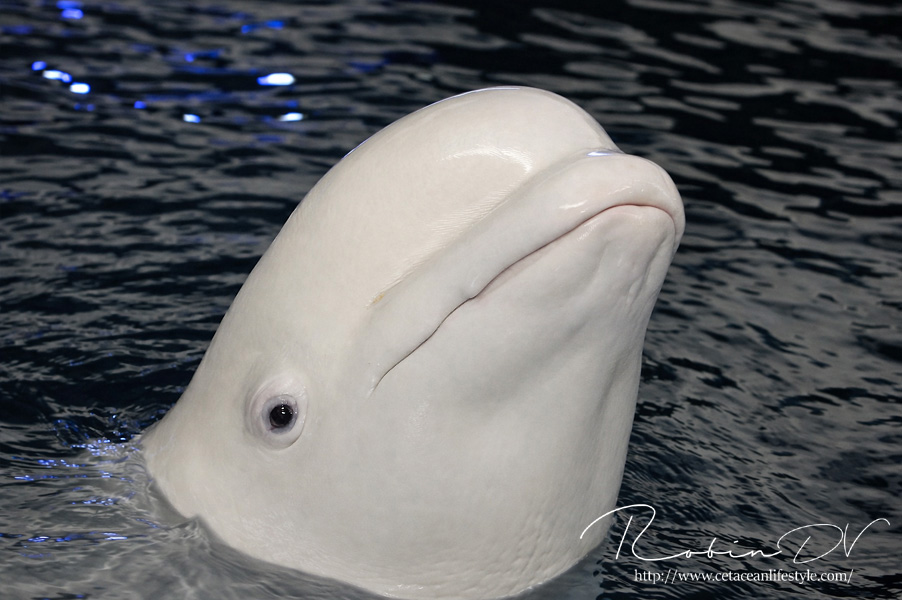
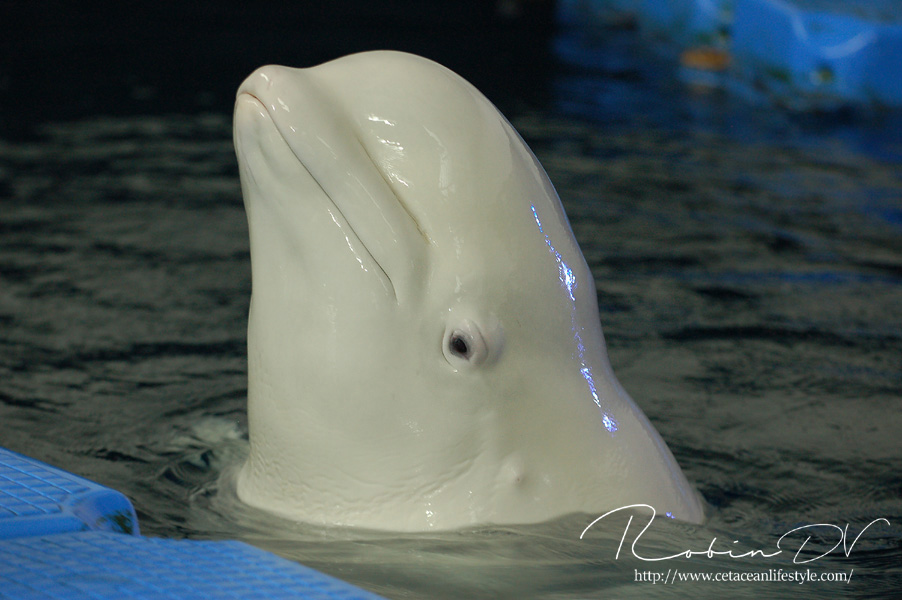
Interview
Their relocation was described in the media as one of the most complex marine-mammal evacuations of all time. This because of the circumstances; during a war, involving multiple countries and specialized transport logistics. Because of this, I knew I hád to do an interview at Oceanogràfic to learn more about this incredible rescue operation. I interviewed Robert Gojceta, the Curator of Marine Mammals at Oceanogràfic and also the studbook keeper of bottlenose dolphins in Europe. He coordinated this rescue and was very involved during the transport. I subjected him to the following questions:
What can you tell us about the background of these two belugas?
Both belugas originate from Russia. They were wild caught, somewhere in the East of Russia. Plombir was the first beluga of the pair to move from Russia to Ukraine. His age at the time of the rescue was estimated to be around 15 years old. He moved to NEMO Odessa in 2010. He lived there as the only beluga, but did live together with bottlenose dolphins for multiple years. Miranda arrived a bit later, her age at the time of the rescue was estimated to be 14 years old. They lived there together with the dolphins until 2012, that year they moved to NEMO Kharkiv. They moved as the group of bottlenose dolphins in Odessa bullied Miranda. In Kharkiv was a smaller bottlenose group with more females, which they thought would fit better together with Miranda. They lived the standard life of dolphinarium-animals in Ukraine; with shows, public interactions and an enclosure that is of different standards than we are used to in Western Europe.
How did Oceanogràfic learn about the situation of the two belugas in Ukraine?
Since the beginning of the war we were already very involved and supported the dolphinarium in Kharkiv. Already back then we collected funds to send financial support for food , proper filtration, energy costs etc. At this point there were no plans on taking any animals from the war zone to Oceanogràfic. When the war got more intense, the owner of NEMO contacted Valencia. There were about 80 captive dolphins and 60 pinnipeds in Ukraine give or take, but Miranda and Plombir were the only belugas. There were some more animals in Crimea, but that area was already occupied by Russia. So there was no option to intervene there at all.
NEMO Kharkiv was on the frontline at this point. As Russia was trying to seize the city by bombings, the situation was getting very dangerous for the animals and their caretakers. There was no way to predict how much worse this was going to get, so there was no other solution than to take action. We were the only option they had at this point. As we were the only facility in Europe that had the space and means to take the two belugas. We simply could not ignore this. Everything went pretty fast; about three months from the first talks to the execution of the transport.
What was the condition of the animals when you decided to intervene?
That was difficult to know. Normally, before a transport you go to the location first to check the animals. At this point I was not allowed to go as there were too many risks. I had to rely on local documentation by the local team and vet. On this documentation everything looked fine.
What were the risks of the rescue operation?
Logistically it was extremely risky. We had to move two very large animals without knowing much up front or anything at all really. The first year of the war NEMO Kharkiv was 800 meters off the frontline. We saw pictures of them fortifying the dolphinarium with sandbags and bullet holes in the roof. Yet they kept caring for the two whales and five dolphins at the facility. Then, the Ukrainian army pushed back Russians. So the city was not in direct urban combat anymore. Ukraine managed to keep the Russians at bay at that moment, But if the Russian pushed back and entered the city again they wouldn’t be able to manage a rescue operation anymore. So thís was the moment to act, but still there were many risks involved.
How did the transport from the war zone proceed?
We knew we had to move fast. The main problem was the distance.The airspace in Ukraine was closed, so the only way to exit the animals out of the country was by road. Which means the nearest operational airport was in Chisinau, the capital of Moldova. First the animals had to undergo an 11-12 hour drive from Kharkiv to Odessa. There we could inspect the animals and possibly have facilities to house them if they were in a bad condition. Then we still had to undergo a 5 hour drive to Moldova, load the animals onto a plane and fly them to Valencia.
This was the only viable option and the only way we could proceed. I flew to Moldova ahead of the transport and then travelled to Ukraine to assess the NEMO location in Odessa. The headquarters of the NEMO facilities lies there as well. The first stop in Odessa was very important to evaluate state of the animals- this was the first time any of us would see them in real life. We also had to have a plan B, which was house them in the facility there in Odessa if the animals were unwell to travel further.
Another major concern was the transport equipment itself. The transport boxes had been built under wartime conditions using very basic materials and had not undergone standard inspection. Unlike IATA-certified transport containers, which are designed to withstand the weight of several tonnes of water and the stresses of loading, unloading, and flight turbulence, these boxes posed a significant risk. A structural failure could have resulted in the loss of water during transit, which would have been fatal for the animals, especially if such a failure occurred mid-flight. For that reason, Odesa also served as a checkpoint to assess whether both the animals and the transport boxes were in a condition suitable to continue the journey.
I also wanted to inspect how the route was from Odessa to the border of Moldova. It seemed simple, as it was not that much kilometers, but in reality this route took many, many hours because of constant border patrol stops. We could not subject the whales to that much extra hours, so we came to the conclusion that a police escort was the only option. So it was good I inspected this before actually moving the animals. I personally have worked in the marine mammal world for over 30 years now and moved a lot of dolphins under different circumstances, but with beluga whales it’s a different protocol and they are different animals after all. So we decided to involve some colleagues from the United States, with more experience in Beluga whale transfers. They joined us one week after in Moldova. We decided I was the only one to go into Ukraine to inspect the animals, because of the risks involved. So I went to NEMO Odessa again to await the animals. The truck housing the animals arrived there together with the vet and caretakers. In Ukraine they move cetaceans a lot between facilities, so they were very practical with the transport. The plan was for the original caretakers of the animals to move with them to Valencia. Most of the men however, couldn’t leave Ukraine as they were tied conscription, which includes mandatory military services. Only one was allowed to leave since he had three kids under the age of 12. So we were mostly supported by the female staff.
I was surprised to see the animals were in a pretty good condition. They were underweight and mildly dehydrated, but otherwise in a good state given the circumstances. Miranda was extremely calm. Plombir was agitated but it was fine. Sometimes you’d like to see some more energy instead of calmness which can mean the animal is becoming apathetic. So being agitated can actually be good. .
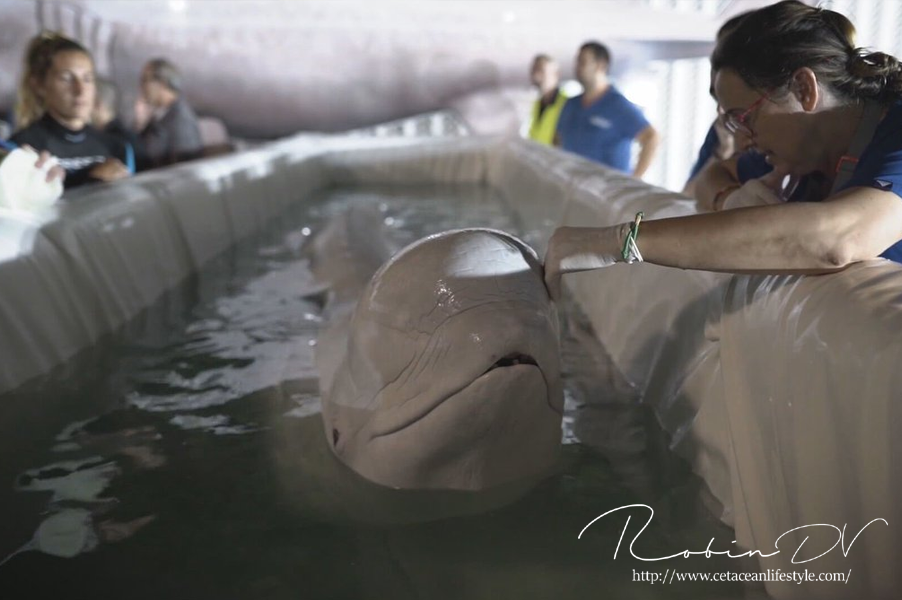
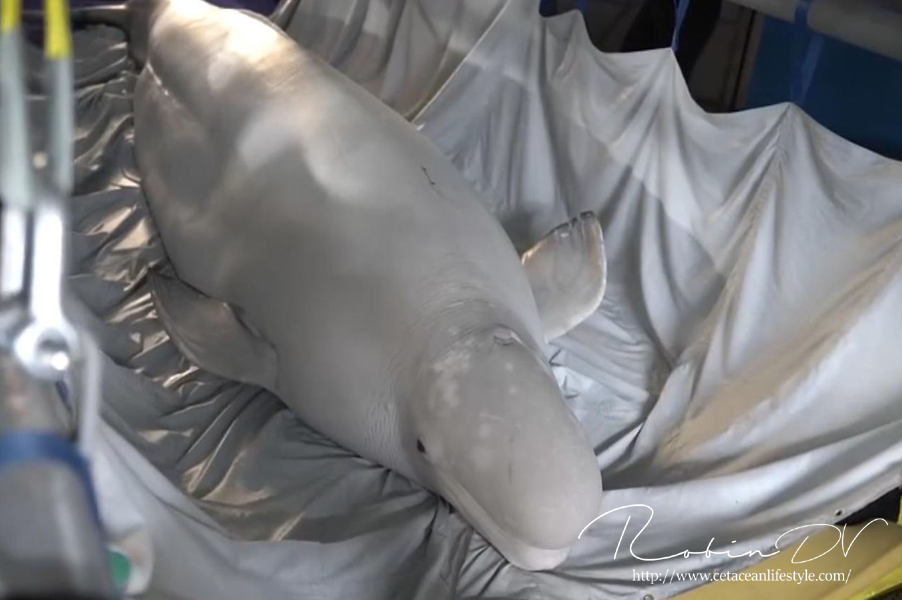
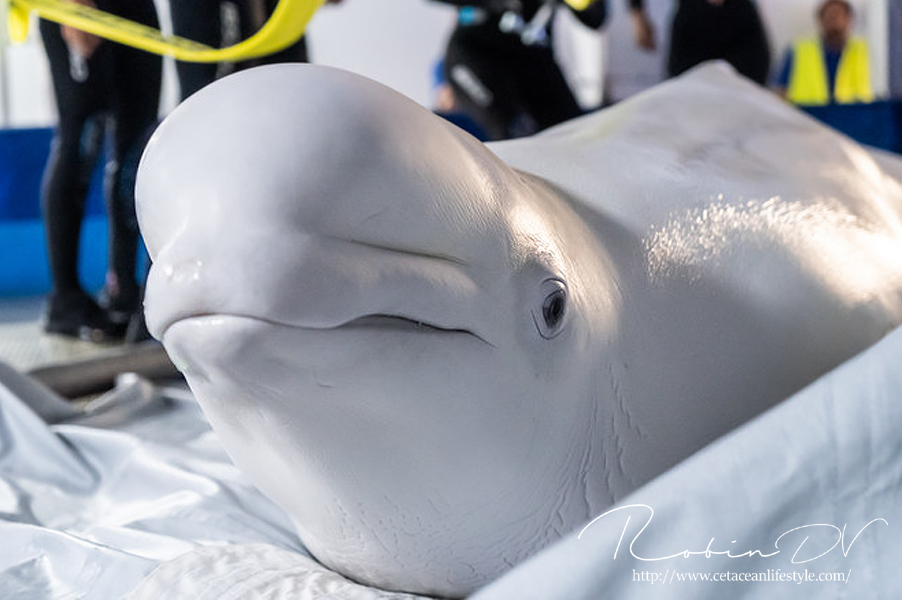
With the condition of the animals assessed, we took the decision to move. We had to drive from Odessa in Ukraine to the airport of Chișinău in Moldova which was about 190 kilometers. We had a police escort to border, but even with that it still took a lot of time, paperwork, phone calls back and forth and other bureaucratic complications. As we arrived at Chișinău airport there was no way back. Now we hád to go. There was no way to go back to Ukraine and there is no dolphinarium in Moldova, so no facility to put the animals in. We can’t just put two whales in bathtub. At the airport of Moldova- even though we went there before to prepare there were also some complications. As it was a small airport, not used to big planes they were absolutely not prepared for this operation. Getting the big transport boxes of the animals into a plane required a large cargo aircraft that can open in the front or back, enough to let the transport boxes through. The usual Western Boeings did not fit out needs.
The airport was also not equipped with a lifting system to lift the boxes into a plane. They were just not prepared for this kind of measures. In the end we agreed on the Ilyushin Il-76, a former Soviet plane, which is a huge cargo plane with an onboard crane system. This way we could lift the transport boxes directly on the plane. The problem was this is an old Russian model. Getting one via Russia was of course not an option, the other main user of that type of plane was Ukraine, which had a closed airspace. So that was also not an option. Eventually we found one in Azerbaijan, who had multiple but only one was allowed to fly because of local pollution laws. This all took very long and was extremely complicated, but the animals where fine and we felt a lot of relief when we finally took off. The flight went smooth and the animals did well. When we landed in Valencia and we saw all of our colleagues standing there waiting for us it was a spectacular moment! So much support, so well organized and with so much professionalism! I went from feeling totally on our own in a war zone to this, and it was an emotional moment. At this point the Oceanogràfic staff and associates took over and I could finally step back a bit. Which was nice, as at this point I hadn’t slept in 24 hours. At this point I didn’t need to be as close to the animals and the proceedings, as they were in good hands. Of course the operation was not over yet. Even placing animal in their new habitat took a lot of effort. We were helped by both the Ukrainian staff and the US staff. Finally the animals were placed into the habitat.
Mission accomplished!
I started working with marine mammals in 1992, and this was one of the most amazing experiences of my whole career. What we were able to put together in such a short amount of time, with everyone being so hyper professional! I can only call the operation a success.
Did you collaborate with any international organizations or governments during this operation?
EAZA, EAAM and also AZA were fully supportive from the beginning, which was a big help. The entire community was behind us. We worked with Seaworld, Georgia Aquarium and the NEMO staff during the transport and of course we had the support of the local government and also the National government of Spain. We had any kind of governmental help both locally and nationally , which was also very important.
What physical and mental condition did they arrive in?
Plombir was great. He was super active from the start and ate almost immediately. Miranda needed a little more time. It took 2 to 3 days for her to eat, which was no cause for alarm. Unlike dolphins, belugas are built to fast in their natural habitat, so it’s not harmful if they don’t eat for a few days. Miranda is a bit more timid in general as well, it is her character. All in all they were doing great.
How are they reacting to their new environment so far?
It was a totally new environment to them. The Ukrainian facilities they were housed in were practically copies of each other. These were however, bare concrete tanks. Smaller than most Western European facilities. Also without any rocks, no multiple pool systems and especially: no gates. The animals had no idea what an opening was.
Crossing the gate to another area was completely new for them. They stayed at the back pool first, which is a bit more similar to how they were housed in Ukraine. Plombir started poking his head in and out of the opening, but it took a month for them to finally cross the gate into the other area. They still prefer to spend a lot of time at the smaller back pool area, even when they have access to all the pools in the habitat.
In human logic or emotion that might seem strange; Why do they not prefer the bigger area? But animals do not have human thoughts or emotions. Bigger is not always better. In many occasions you see that marine mammals prefer the smaller areas, even when they have access to a big pool as well. This can be because they feel safer there or for a dominant animal it might be easier to control a smaller environment versus a larger one for example. This shows we have to respect the animals needs and not just project our own ideas of what is right onto their behavior.
Were there any specific health issues that needed to be addressed?
The animals were a bit underweight for our standards. This is because they previously lived in much warmer water in Ukraine, as they were sharing their habitat with dolphins. So it’s logical they are a bit ‘skinnier’ in those conditions. They had also been restricted in food intake, because fish supplies in Ukraine could not be guaranteed. so they spent several periods on half their diet to be sure the facility could have some fish available in case of scarcity.
Our belugas live in an arctic setting with cold water and cooled, filtered air. So we had to compromise in temperature. We couldn't put Miranda and Plombir in arctic temperature waters just like that. They had to gradually get used to it and increase in bodyweight. We also couldn’t just turn up the temperature to what they were used to in Ukraine, as our own two whales Yulka and Kylu do have the body conditions fit for colder water. So we compromised and went somewhere in the middle. We raised the temperature slightly to accommodate all belugas and eventually slowly cool down the temperature as Miranda and Plombir increase their bodyweight.
What does this rescue mean for your broader mission?
It means a lot.
Of course rescuing animals is one of our main missions. But simply we could say that the peculiarity of this situation makes it unique. We were the only ones that could help in this case and we couldn’t turn our back to it, even though the stakes were high. This was both a technical situation, a politically loaded one, but also very costly of course.
We were really prepared for the worst case scenario, but due to the severity of the situation we also had nothing to lose. At the end of the day it worked out great! We also had to consider the reaction of the public and also animal activists. The concept of cetaceans under human care is under fire for years now. At the end of the day we are here to save animals, for conservation, education and we knew we were the only solution in this case.
What is the long-term plan for these two belugas?
They are part of our beluga family now. They will stay here in Oceanogràfic and are never going back to Kharkiv. Even when the war is over and the situation improves there. We are now responsible for the animals. They have also been integrated in the beluga database and in both the European and American studbook.
Do you expect to help more animals from conflict areas?
At the moment there’s nothing on the table and it’s not the time to decide on that. There are of course still many marine mammals like dolphins and sea lions in facilities in Ukraine. Even if we wanted to rescue just a few of them we couldn't do it. We don’t have enough space here in our habitat and most parks in Europe that house dolphins and/or sea lions don’t have any room for more animals at the moment.
Even all facilities in Europe together do not have the capacity to house all the dolphins and pinnipeds in Ukraine. But currently they can be moved to safer places within Ukraine itself.
We will however never turn our head away if we are asked to help again and will see what we can do. Like financial support and support in any other way. In this case that is probably the maximum we can do at the moment.
What was the most impressive moment for you personally during this rescue?
The professionalism and capacity of Oceanogràfic team! When we did this I just recently joined the team. I started march 1, 2021. This was the first big project I took on at this job. I did visit here as an inspector before, and had even been here when beluga habitat was under construction and have known colleagues from here for years, so I was not totally new and unaware. Still this was off in the deep end right away.
Knowing transporting cetaceans is difficult under optimal circumstances, it’s crazy we managed to do this, in these extreme circumstances in just 3 months! In my career I was involved in many transports. In the majority of them I was the center person, which everyone looked to for directions. That can be extremely stressful as all eyes are on you. I didn't feel any of that pressure with the move of these belugas. I of course felt the responsibility, but we really were all in this together.
Observation
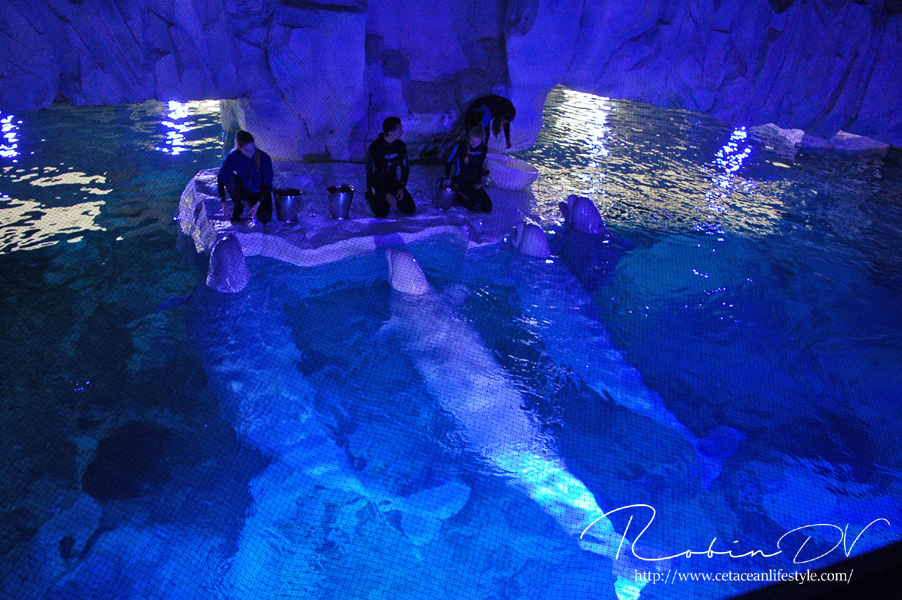
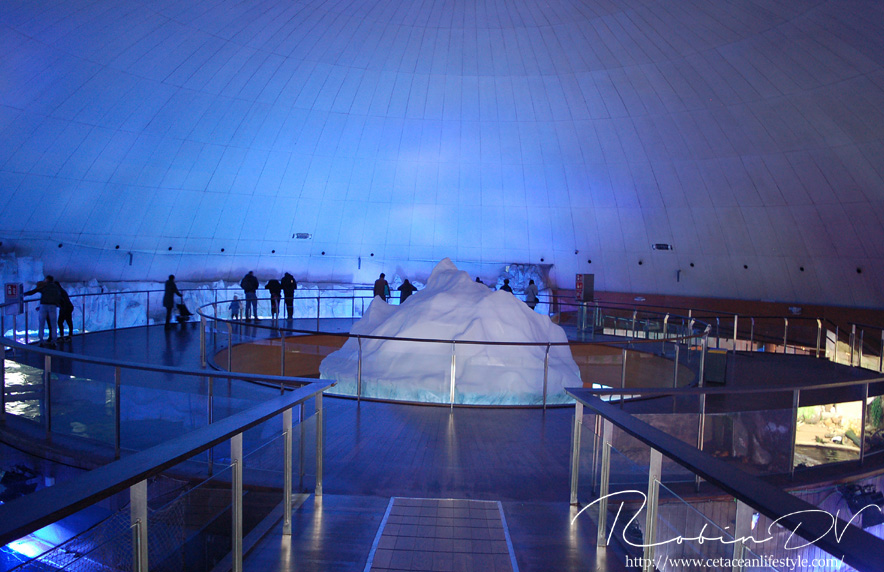
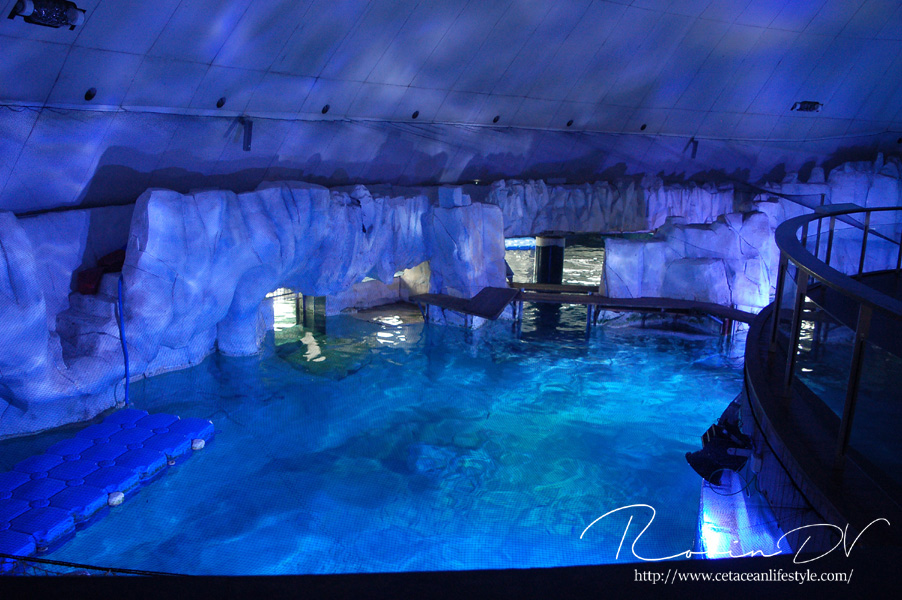
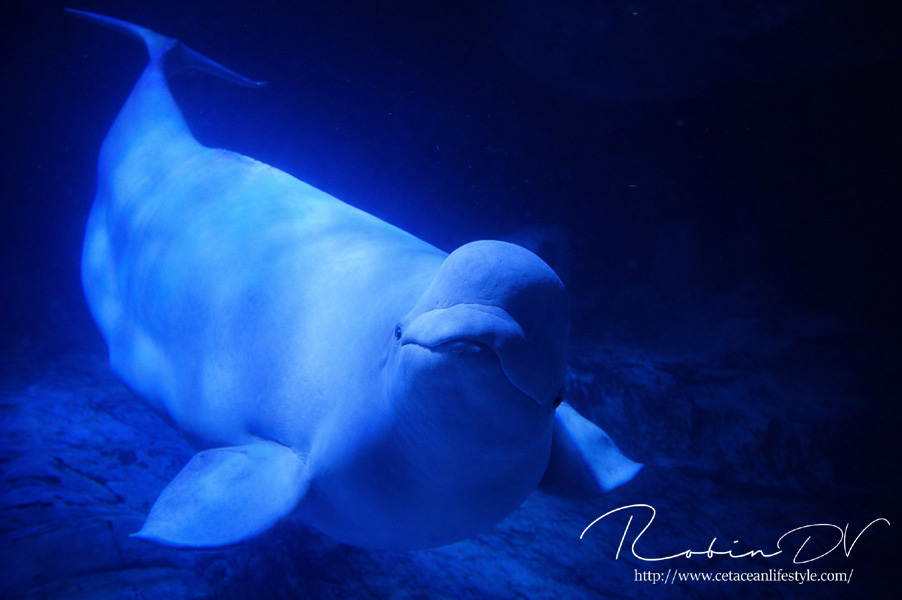
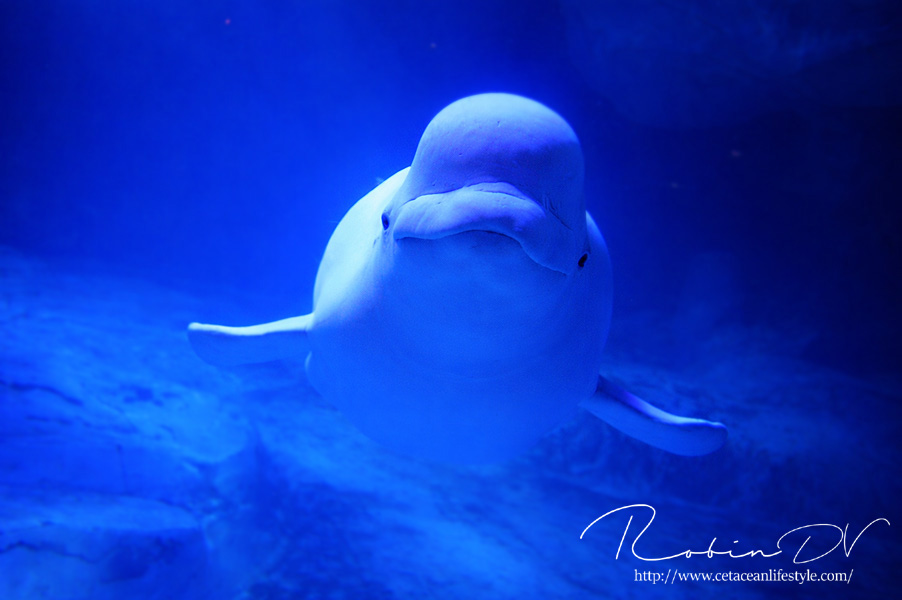
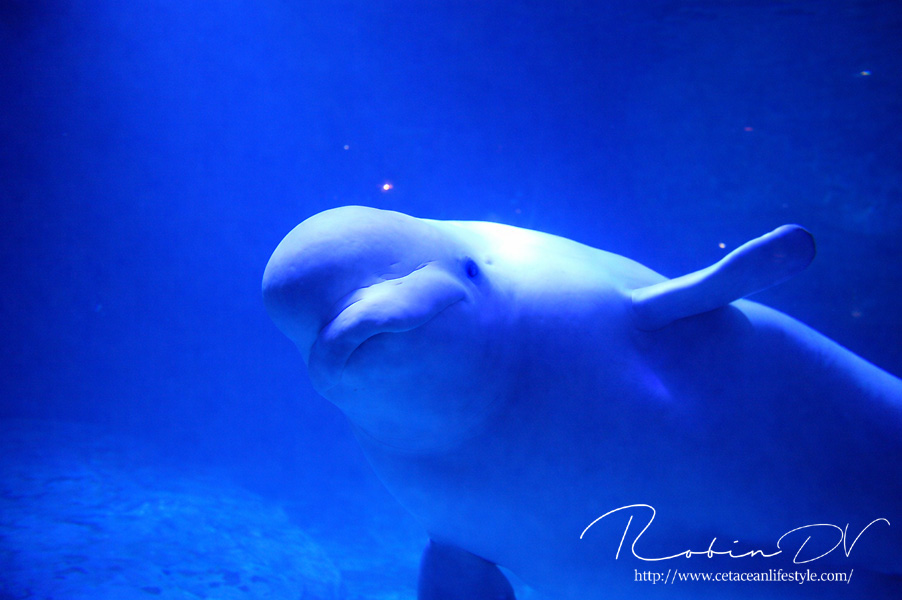
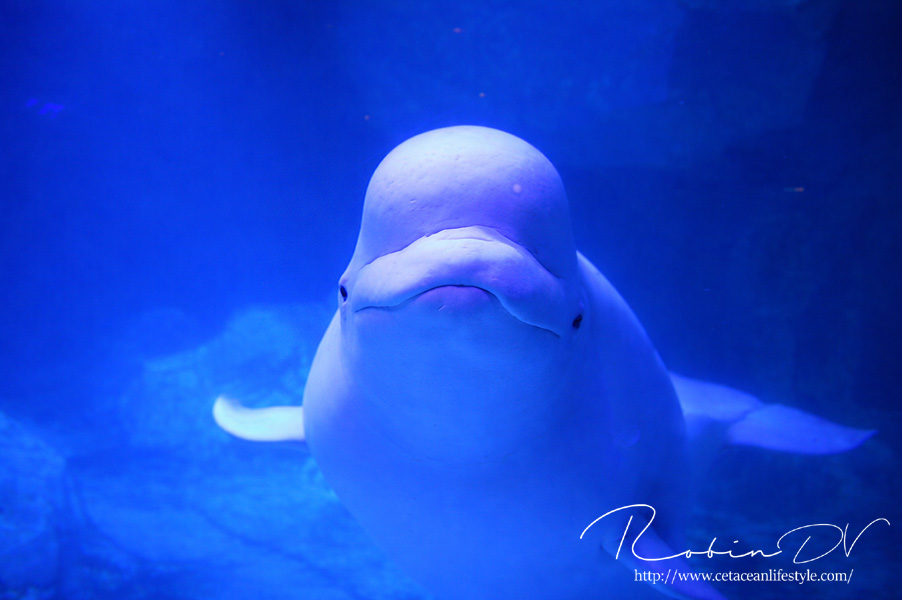
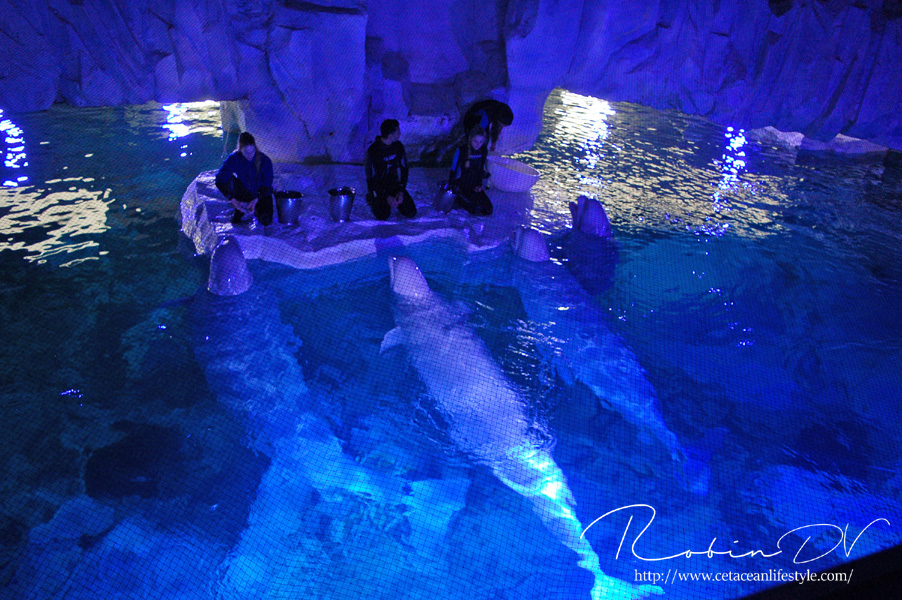
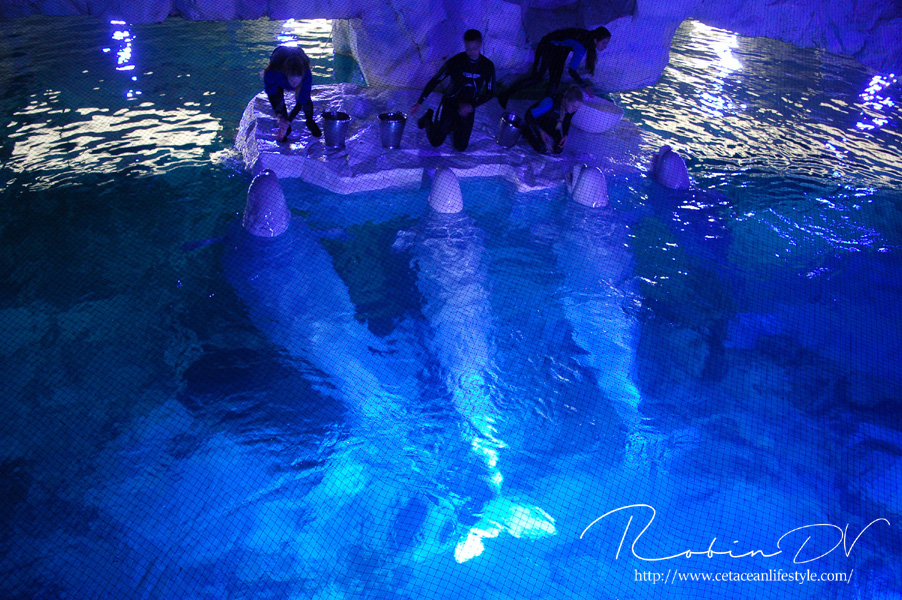
When I arrived at Oceanogràfic I headed for the beluga habitat right away. I decided to on my first day, visit the park as a regular visitor. So I could see the animals and their behavior firsthand as any visitor would and make my own observations without being influenced by what I saw behind the scenes or what I learned in the interview. What was apparent right away to me was that Miranda and Plombir spend most of their time in the back pool area, which can only partly be seen by visitors, mostly from above. In the larger, public area of the habitat were Yulka and Kylu, while Miranda and Plombir were staying in the backstage area. I already speculated myself this would be logical as the backstage area was where Miranda and Plombir were introduced first. So this probably felt safer to them and it probably was a pool more similar to what they experienced in their old habitat back in Ukraine. They did come out to the larger area briefly sometimes, especially Plombir, but then returned to the backstage area quite soon after as well. Later in the day I observed both Miranda and Plombir in one of the larger, public areas of the habitat. They were actively playing with enrichment for long periods of time. This was very positive to see. They were together all the time. I never saw them apart from each other, other than when Plombir took a short lap around the habitat, but then we’re talking about only a few minutes. It was clear that these animals are very close and prefer to spend time with each other rather than the other two belugas present at the facility. I saw Miranda and Plombir interact with each other numerous times. Playing, sharing their toys and bumping into each other or touching each other with their mouths. I did not see any similar interactions between them and Yulka or Kylu, the other two belugas. For now there seemed to be two ‘pairs’ so to say, in which Miranda and Plombir swam together most of the time and Yulka and Kylu swam together most of the time. During all of these hours of observation however, this was of their own free choice. All gates in the habitat were open and all animals were able to access the entire habitat at any time. There was also a very clear visual difference between Miranda and Plombir versus Yulka and Kylu. First of all, Plombir the easiest to recognize of the four as he is the largest by far. He is a very large animal in size and about 5 meters in length. Probably one of the largest if not the largest beluga under human care. But notably Yulka and Kylu have a bit more blubber compared to Miranda and Plombir. You can see this very well at the ventral abdominal region, where you can see an accumulation of fat on the two original animals, but Miranda and Plombir are a bit more ‘lean’ in comparison. Later in the interview I learned this was because they are gradually improving the weight of Miranda and Plombir. As they are not adapted to arctic temperatures, while Yulka and Kylu are. On day two I was allowed to visit the beluga habitat behind the scenes and witness one of the training sessions. The beluga habitat consists out of the public area that is visible through the glass, but also a pool system behind the scenes. The area was once again clean and organized, especially for a behind the scenes area. Several boardwalks and rafts are installed around the complex to approach the belugas. I was invited to one of the boardwalks to witness two training sessions. One with all four animals and one with just Miranda and Plombir. It was easy to see the animals are all very close to their caretakers. They had no problem being closely together with the other belugas during the training sessions and they responded very active and positive to their trainers. Miranda and Plombir also participated very focused, but were calm in behavior. Miranda sometimes briefly swam away, but shortly after returned to her designated trainer. You can tell the animals are very used to the routines and they communicated with their trainers through sounds and facial expressions. Later that day I witnessed two other training sessions with all four animals in the public area. Rewards consisted of fish, but also toys and attention. All in all they seemed very well integrated in this group. Actively using the entire habitat, participating in training sessions and playing with enrichment. Establishing more social interaction with Yulka and Kylu might take some more time. But my visit was of course only a snapshot in the daily life of these animals..
Conclusion
I deliberately named this article “the Long Road to Sanctuary”. Where the word “Sanctuary” is an intentional worldplay. Because this word is also used as the name for many hypothetical and attempted projects like the one for the belugas in Iceland. A “marine mammal sanctuary” they call this concept.
A marine mammal sanctuary is often proposed as an alternative home for dolphins and whales that have lived in aquariums or dolphinariums. In theory, these facilities are located in natural coastal areas such as bays or lagoons, where animals can live in real seawater within a protected enclosure while still receiving food, veterinary care, and monitoring from staff. (Making them in my opinion not that different from current dolphinaria, other than a more natural setting, but there are even dolphinaria with a natural setting as well)
Sanctuaries are often described as places where marine mammals can retire from captivity and live in a more natural environment. In reality, however, very few true sanctuaries exist, and many projects never progress beyond the planning stage. Building and maintaining such facilities is extremely complex and expensive, requiring specialized infrastructure, long-term funding, and continuous professional care. Many initiatives rely heavily on donations and struggle to secure the resources needed to construct and operate a sanctuary. Even when sanctuaries are developed, transitioning animals that have lived for decades under human care into an open marine environment can be challenging. Animals may struggle to adapt to new conditions such as pathogens, weather, environmental noise, or unfamiliar surroundings. In addition, legal and ecological concerns, such as the risk of disease transmission to wild populations can make it difficult or even illegal to place captive animals in coastal habitats.
More importantly, sanctuaries do not automatically guarantee improved welfare. While they are often perceived as a more “natural” and therefore better environment, animals that have spent most of their lives in managed care may not necessarily benefit from increased space or exposure to natural conditions. In some cases, they may experience stress or discomfort when introduced to less controlled environments. Observations from certain projects suggest that individual animals may show a preference for the familiarity and predictability of their existing habitats over more variable open-water settings. These considerations highlight that animal welfare outcomes are not always intuitive. Rather than relying solely on human expectations of what seems more natural or desirable, or “better” for the animals, careful scientific assessment is needed to evaluate whether a given environment truly improves or compromises welfare for each individual animal. As a result, while sanctuaries are often presented as a straightforward solution, they remain a complex and context-dependent option in practice.
As such, Marine mammal sanctuaries do not seem to be realistic large-scale solution for the more than 2,000 dolphins and whales currently living in dolphinaria and aquariums in Western countries alone. Nor are they necessarily positive for the animal welfare, that can indeed decline when animals are introduced into such a habitat. At present, only one operational sanctuary exists worldwide, which is the one in Iceland mentioned in this article. And even that facility accommodates just two animals and after seven years has still not succeeded to integrate them into the more natural environment provided. They are effectively being used to support a narrative of success for the sanctuary, even when it may not reflect their actual welfare. Most other sanctuary proposals are still in the planning phase or have been delayed, cancelled, or abandoned. Even if all currently proposed sanctuary projects were successfully built, their combined capacity would likely only allow a few dozen animals to be housed. Not to mention that it will also most probably generate new health and welfare problems for these animals. This is a tiny fraction of the total number of dolphins and whales currently living under human care. Constructing enough sanctuaries to accommodate thousands of animals would require enormous financial resources, large coastal areas with suitable environmental conditions, long-term staffing, and complex regulatory approval, factors that have already proven difficult for even a single project.
More than that, the issue is not primarily financial, but also conceptual. Sea pens do not necessarily lead to improved welfare outcomes. Evidence suggests that welfare is more closely linked to factors such as social structure, water quality, diet, and veterinary care than to increased space or ocean-based enclosures. In this context, sanctuaries may fall short, not only due to a lack of funding, but because they do not consistently deliver the welfare benefits often claimed.
The word “sanctuary” generally refers to a place of safety, protection, or refuge where something is sheltered from harm or disturbance. In a broad sense, a sanctuary is: A protected place where people or animals can live safely.
In practice, the care provided by Oceanogràfic Valencia for the rescued belugas Miranda and Plombir resembles the functional role of a sanctuary more than many projects that carry the sanctuary label. The two whales were evacuated from a war zone in Ukraine through a complex international rescue operation and were transported to safety in Valencia specifically so they could receive veterinary care, long-term housing, and a stable environment. At Oceanogràfic they are continuously monitored by specialists, have access to controlled water conditions, and are integrated into a small social group of other belugas, which is important for their welfare. By contrast, the only operational marine mammal sanctuary for belugas in Iceland has struggled to successfully transition it’s animals to the open sea pen environment, keeps them in unnatural circumstances (though all-male groups exist in wild belugas, all female groups do not and the two individuals in Iceland are both female and it is questionable to say the least that this project is located in Iceland, where belugas are not native at all)
This illustrates how the sanctuary concept, while appealing in theory, can face significant practical challenges. For this reason, some observers argue that well-equipped aquariums with large habitats, veterinary infrastructure, and experienced staff can effectively function as de facto sanctuaries for animals that cannot return to the wild. In such cases, the priority is not the label of the facility, but whether it provides long-term safety, professional care, and stable living conditions for the animals involved. We need to rely on scientific evidence to determine what truly benefits the animals, rather than on impressions or feelings. In my view, zoological facilities demonstrate this more effectively than the sanctuary projects that have been realized, proposed and/or discontinued over time.